Stress vs Anxiety: What’s the Difference and Why It Ruins Sleep
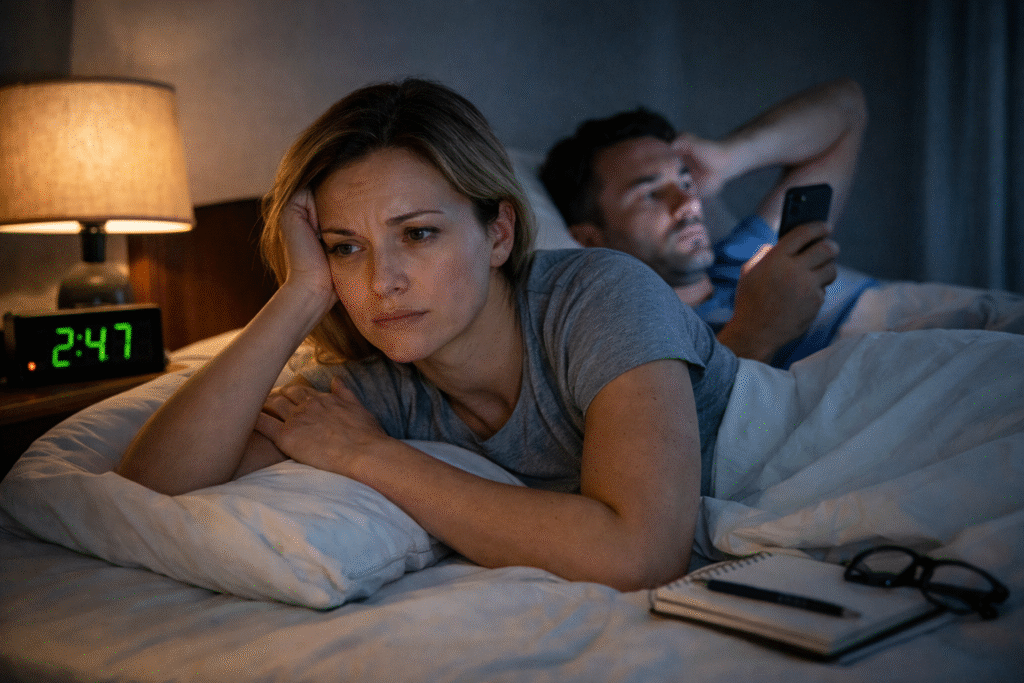
You go to bed exhausted.
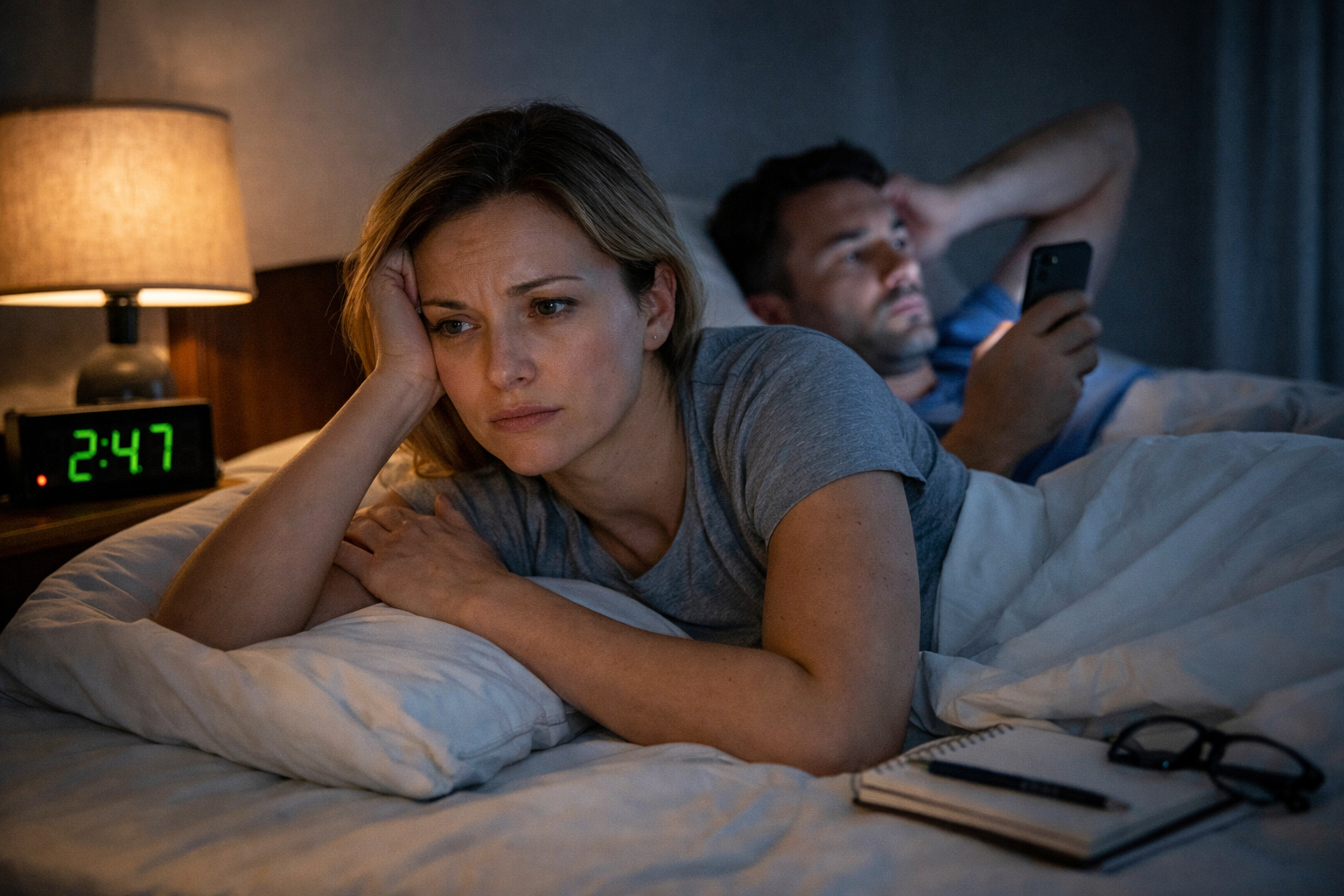
The lights are off. The room is quiet. Your body feels tired.
But your mind suddenly turns on.
You start thinking about tomorrow’s responsibilities.
A conversation you had earlier in the day.
A problem you haven’t solved yet.
Minutes pass. Then an hour.
You are tired, but your brain refuses to rest.
If this sounds familiar, stress or anxiety may be interfering with your sleep.
Many people use the words stress and anxiety as if they mean the same thing. In everyday conversation, they often overlap.
However, from a scientific perspective, stress and anxiety are not identical. They arise from different triggers and affect the brain and body in different ways.
Understanding the difference can help explain why sleep problems happen and how to fix them.
Both stress and anxiety activate brain systems designed to keep us alert and prepared for danger. When those systems remain active late into the evening, the body struggles to shift into the calm state required for sleep.
Over time, this can lead to difficulty falling asleep, frequent awakenings, and poor sleep quality.
Learning how stress and anxiety affect sleep is an important step toward protecting long-term health.
What Is Stress?
Stress is the body’s natural response to a challenge, demand, or threat.
It is a biological reaction that helps us adapt to difficult situations.
When the brain detects a stressor, something that requires attention or action, it activates a series of systems designed to help the body respond quickly.
Common stress triggers include:
- Work deadlines
- Academic exams
- Financial pressure
- Relationship conflicts
- Health concerns
- Major life changes
When stress occurs, the body activates the stress response system, which involves several biological pathways.
One of the most important systems involved is the hypothalamic–pituitary–adrenal (HPA) axis (the body’s stress signaling system). This system connects the brain to the endocrine system and regulates the release of hormones, including cortisol, often called the body’s main stress hormone.
At the same time, the sympathetic nervous system (the body’s internal alarm system) becomes activated. This triggers the well-known fight-or-flight response, increasing heart rate, sharpening focus, and preparing the body to take action.
In the short term, these responses can actually be helpful. Stress can improve concentration and motivation, allowing people to perform well during important challenges.
For example, moderate stress before an exam or presentation may improve focus and performance.
However, problems arise when stress becomes chronic.
When stress persists for weeks or months, the body may remain in a prolonged state of physiological alertness. Elevated cortisol and increased nervous system activity can interfere with many important bodily functions, including sleep regulation.
What Is Anxiety?
While stress typically responds to a specific challenge, anxiety is different.
Anxiety is the anticipation of a future threat or uncertainty.
Instead of reacting to something happening right now, the brain begins preparing for something that might happen.
This anticipation often leads to ongoing mental activity, such as:
- persistent worrying
- repetitive thoughts
- overanalyzing situations
- imagining worst-case scenarios
Psychologists often describe two main types of anxiety.
State Anxiety
State anxiety is temporary anxiety triggered by a stressful event.
For example, someone might feel extremely nervous before a medical exam, a job interview, or an important test.
Once the event passes, the anxiety typically fades.
Trait Anxiety
Trait anxiety refers to a more stable tendency to feel anxious across many situations.
Some individuals naturally have a higher baseline level of anxiety. They may be more sensitive to uncertainty and more likely to interpret situations as threatening.
People with higher trait anxiety often experience stronger reactions to stress and may be more vulnerable to sleep disturbances.
Another important difference between stress and anxiety is that anxiety can persist even after the original stressor disappears.
For example, a student may continue worrying about academic performance long after exams are finished. This lingering worry can keep the brain active at night and interfere with sleep.
5 Signs Anxiety Is Affecting Your Sleep
Many people believe they simply “sleep poorly.”
In reality, anxiety may quietly be disrupting sleep every night.
Recognizing the signs can help identify when anxiety may be involved.
1. Your Mind Won’t Turn Off at Night
You lie down in bed, but instead of relaxing, your mind becomes more active.
You may find yourself:
- replaying conversations from earlier in the day
- worrying about tomorrow’s responsibilities
- imagining potential problems
- planning tasks that could wait until morning
This type of mental activity, often called racing thoughts, is one of the most common ways anxiety interferes with sleep.
2. Your Body Feels Tense in Bed
Anxiety does not only affect thoughts. It also activates the body’s alert system.
Some people notice symptoms such as:
- a faster heartbeat
- muscle tension
- shallow breathing
- restlessness
These symptoms occur because anxiety activates the fight-or-flight response, making it harder for the body to transition into sleep.
3. You Wake Up in the Middle of the Night with Worry
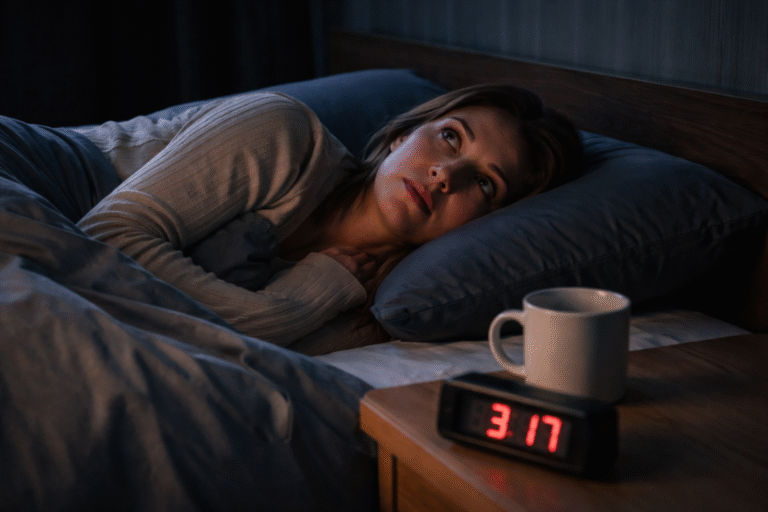
Some people fall asleep normally but wake up during the night, often between 2 AM and 4 AM, with a sudden surge of thoughts.
The mind may quickly start reviewing problems, responsibilities, or unfinished tasks.
Once this cycle begins, falling back asleep can be difficult.
4. You Wake Up Tired Even After Sleeping Enough
Spending eight hours in bed does not guarantee restorative sleep.
Anxiety can reduce sleep quality by causing:
- lighter sleep
- frequent brief awakenings
- Reduced deep sleep
As a result, someone may sleep for several hours yet still wake up feeling exhausted.
5. You Start Worrying About Sleep Itself
After several nights of poor sleep, people sometimes develop sleep anxiety.
They begin thinking:
- “What if I can’t fall asleep tonight?”
- “If I don’t sleep, tomorrow will be a disaster.”
- “Something must be wrong with me.”
Ironically, worrying about sleep increases mental tension, making sleep even harder.
Can Stress Cause Insomnia?
Yes. Persistent stress is strongly associated with insomnia.
Stress can interfere with sleep through several mechanisms.
For example, stress can:
- increase cortisol levels in the evening
- raise heart rate and alertness
- make it difficult to relax before bedtime
Normally, cortisol levels decline in the evening as the body prepares for sleep. When stress keeps cortisol elevated late at night, it can suppress melatonin, the hormone that helps regulate the sleep-wake cycle.
As a result, the body may struggle to initiate sleep.
Research consistently shows that individuals with higher perceived stress report poorer sleep quality, longer time to fall asleep, and more frequent awakenings.
The Sleep–Anxiety Cycle
One of the most important discoveries in sleep research is that sleep and anxiety influence each other.
The relationship works in both directions.
Poor sleep can increase anxiety the following day.
At the same time, higher anxiety can make it harder to sleep the next night.
Over time, this interaction can create a self-reinforcing cycle:
Stress → Anxiety → Poor sleep → Increased anxiety → Worse sleep
Once this cycle begins, sleep problems may persist even after the original stressor resolves.
Breaking this cycle often requires addressing both sleep habits and daytime stress or anxiety.
How to Calm Anxiety Before Bed
Improving sleep often involves calming the brain before bedtime.
Several evidence-based strategies may help reduce nighttime anxiety.
Helpful approaches include:
- maintaining a consistent sleep schedule
- limiting caffeine late in the day
- Reducing evening screen exposure
- practicing relaxation techniques such as breathing exercises or meditation
- engaging in regular physical activity
- addressing stressful tasks earlier in the day
For individuals experiencing persistent insomnia, Cognitive Behavioral Therapy for Insomnia (CBT-I) is considered the most effective long-term treatment. CBT-I is a structured, evidence-based program that helps people change thoughts and behaviors that interfere with sleep.
Instead of relying on sleeping pills, CBT-I teaches practical strategies that help the brain relearn healthy sleep patterns.
The Bottom Line
Stress and anxiety are closely related but not identical.
Stress is the body’s response to immediate challenges or demands.
Anxiety involves anticipating possible future threats and uncertainty.
Both activate biological systems that increase alertness and readiness for action. When these systems remain active late at night, they can interfere with the body’s ability to relax and fall asleep.
Understanding the difference between stress and anxiety can help people recognize why sleep problems occur, and why managing both daytime stress and nighttime worry is essential for protecting healthy sleep.
With the right strategies and support, most sleep problems related to stress and anxiety can be significantly improved.
References
American Psychological Association. Stress effects on the body.
American Psychiatric Association. Diagnostic and Statistical Manual of Mental Disorders (DSM-5).
Alvaro, P. K., Roberts, R. M., & Harris, J. K. (2013). A systematic review assessing bidirectionality between sleep disturbances and anxiety.
Kalmbach, D. A., et al. (2018). The impact of stress on insomnia.
Baglioni, C., et al. (2016). Insomnia as a predictor of mental disorders.
Walker, M. (2017). Why We Sleep: Unlocking the Power of Sleep and Dreams.
National Sleep Foundation. Stress and sleep reports.