How Sleep Affects Weight Loss and Metabolism

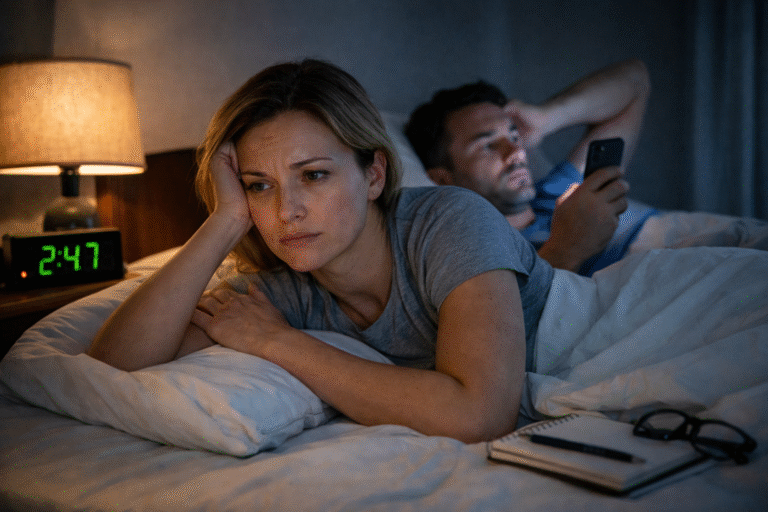
You may be eating better and moving more, yet still feel stuck. Sometimes the missing piece is not effort. It is sleep.
Weight health is often framed as a simple equation: calories in minus calories out. But sleep affects that equation in ways that are easy to overlook. Poor sleep can increase appetite, shift food choices, disrupt blood sugar regulation, and make weight management harder over time. At the same time, higher body weight can raise the risk of sleep disorders that make restorative sleep even harder to get.
At CareThrive, we believe lasting health changes start with the full picture. Sleep is part of that picture.
Sleep and Weight Are Connected Both Ways
This relationship is not just a theory. It shows up in both experimental and population research.
A major review in Nature Reviews Endocrinology found that insufficient sleep tends to increase daily energy expenditure by about 100 calories. Still, it increases daily energy intake by more than 250 calories, leaving people in a positive energy balance overall. That is one reason short sleep is linked to an increased risk of weight gain.
That same review also found that sleep restriction can affect appetite signaling and food reward pathways. The hormone story is more nuanced than many blogs suggest: ghrelin and leptin may shift in some studies, but the stronger consensus is that inadequate sleep reliably increases the drive to eat and often leads to higher calorie intake, whether or not hormone changes are consistent across experiments.
Why Poor Sleep Can Make Healthy Choices Harder
When you are underslept, the challenge is not just low energy.
Research suggests that too little sleep can increase hunger, reduce food control, and make high-calorie foods more appealing. In practice, that can look like:
- bigger portions
- more evening snacking
- more cravings for ultra-processed foods
- less energy for movement the next day
That does not mean sleep “causes” obesity on its own. But it does mean poor sleep can push eating and activity patterns in the wrong direction often enough to matter.
Sleep Also Affects Blood Sugar and Metabolism
Sleep is a metabolic health issue, not just a comfort issue.
The American Academy of Sleep Medicine and the Sleep Research Society recommend that adults get 7 or more hours of sleep per night, regularly, for optimal health. Their consensus statement notes that routinely sleeping less than 7 hours is associated with adverse outcomes, including weight gain, obesity, and diabetes.
That matters because poor sleep is also linked to lower insulin sensitivity and impaired glucose regulation, which can make weight management harder even when someone is trying to make healthier choices.
When Extra Weight Starts to Disrupt Sleep
The relationship also runs in the other direction.
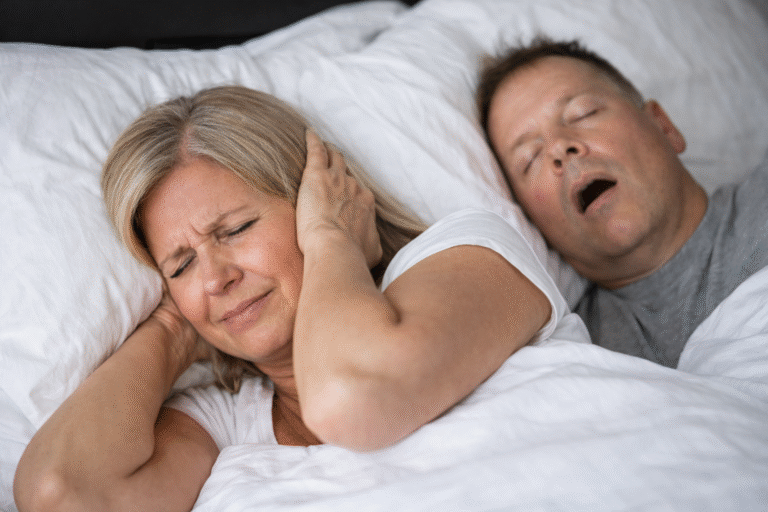
Obesity is one of the strongest risk factors for obstructive sleep apnea, a condition that repeatedly interrupts breathing during sleep. One review reported that obstructive sleep apnea is present in about 41% of people with a BMI over 28, and prevalence may be as high as 78% in people referred for bariatric surgery. The same review found that a 10% increase in body weight was associated with a 32% increase in apnea-hypopnea index and a sixfold increase in risk of developing moderate-to-severe sleep apnea.
This matters because untreated sleep apnea can worsen sleep quality, fatigue, and metabolic strain, creating a loop that becomes harder to break.
This Matters for Kids Too
Sleep and weight are linked early in life, not just in adulthood.
A systematic review and meta-analysis of prospective studies found that short sleep was associated with a higher risk of developing overweight or obesity across childhood and adolescence. The pooled risk ratios were 1.57 in early childhood, 2.23 in middle childhood, and 1.30 in adolescence.
That does not mean every child who sleeps less will develop obesity. But it does mean sleep habits belong in the conversation anytime families are thinking about long-term metabolic health.
It’s Not Only About How Long You Sleep
Timing matters too.
Circadian misalignment happens when sleep and eating occur at biologically inappropriate times, such as irregular sleep schedules, shift work, or frequent late-night eating. The same 2023 review found that circadian misalignment can reduce 24-hour energy expenditure by about 3%, or roughly 55 calories per day, while also altering appetite hormones and promoting less healthy food choices.
So even if total sleep time looks acceptable on paper, inconsistent timing can still work against metabolic health.
What You Can Do
This is where many articles get vague. Here is the practical version.
Aim for the right sleep target.
For most adults, the evidence-based target is at least 7 hours of sleep per night, regularly. Sleeping under that range routinely is where risk starts to rise.
Keep your sleep schedule steady.
Try to keep bedtime and wake time within a similar window every day, including weekends. Regularity supports circadian rhythms, which help regulate appetite and sleep quality.
Avoid heavy late-night eating when possible.
Because circadian misalignment and biologically late food intake can worsen metabolic regulation, it helps to finish large meals 2 to 3 hours before bed when you can. The evidence is stronger for the timing pattern than for any single exact cutoff.
Watch for signs of a sleep disorder
Talk with a clinician if you have:
- loud snoring
- witnessed pauses in breathing
- waking up gasping
- morning headaches
- excessive daytime sleepiness
- persistent insomnia
- trouble functioning despite “enough” time in bed
Those are signs that the issue may not be just sleep hygiene. Sleep apnea and other sleep disorders often need proper evaluation.
The Bottom Line
If weight loss feels harder than it should, sleep deserves attention.
The strongest evidence does not say that sleep is the only cause of weight gain. It does show that insufficient sleep and circadian disruption can increase appetite, raise calorie intake, worsen metabolic health, and make behavior change harder to sustain. It also shows that higher body weight can increase the risk of sleep apnea and other sleep problems, reinforcing the cycle.
At CareThrive, we see sleep as one of the most overlooked tools in long-term health.
Medical disclaimer: This article is for educational purposes only and is not medical advice. It does not diagnose, treat, or prescribe. Personal sleep needs and weight-related risks vary, so decisions about symptoms, testing, and treatment should be made with a qualified healthcare professional.
References
Chaput, J.-P., McHill, A. W., Cox, R. C., Broussard, J. L., Dutil, C., da Costa, B. G. G., Sampasa-Kanyinga, H., Lord, C., Wright, K. P., Jr., & St-Onge, M.-P. (2023). The role of insufficient sleep and circadian misalignment in obesity. Nature Reviews Endocrinology, 19(2), 82–97. https://doi.org/10.1038/s41574-022-00747-7.
Miller, M. A., Kruisbrink, M., Wallace, J., Ji, C., & Cappuccio, F. P. (2018). Sleep duration and incidence of obesity in infants, children, and adolescents: A systematic review and meta-analysis of prospective studies. Sleep, 41(4), zsy018. https://doi.org/10.1093/sleep/zsy018.
Punjabi, N. M. (2008). The epidemiology of adult obstructive sleep apnea. Proceedings of the American Thoracic Society, 5(2), 136–143. https://doi.org/10.1513/pats.200709-155MG.
St-Onge, M.-P. (2017). Sleep-obesity relation: Underlying mechanisms and consequences for treatment. Obesity Reviews, 18(Suppl. 1), 34–39. https://doi.org/10.1111/obr.12499.
Watson, N. F., Badr, M. S., Belenky, G., Bliwise, D. L., Buxton, O. M., Buysse, D., Dinges, D. F., Gangwisch, J., Grandner, M. A., Kushida, C. A., Malhotra, R. K., Martin, J. L., Patel, S. R., Quan, S. F., & Tasali, E. (2015). Recommended amount of sleep for a healthy adult: A joint consensus statement of the American Academy of Sleep Medicine and Sleep Research Society. Journal of Clinical Sleep Medicine, 11(6), 591–592. https://doi.org/10.5664/jcsm.4758.