
Our story
Every family deserves access to trusted health information, regardless of where they come from, what language they speak, or what they earn. CareThrive was built on that belief.
Why CareThrive exists
The same story kept repeating: families leaving with questions they were too afraid to ask and information they could not understand, making high-stakes health decisions without a single trusted resource written for them. Not in their language. Not for their reality. Not at a cost they could afford. So CareThrive was built for every family that has ever been left out of the health conversation. No exceptions. No waiting for someone else to fix it.
Our mission
CareThrive exists to ensure that every family, regardless of where they come from, what language they speak, or what they earn, has access to trusted, plain-language health education built by physicians and rooted in evidence.
Health knowledge is not a privilege. It is a right.
Our vision
CareThrive envisions a world where quality health education reaches every underserved family, across languages, across generations, and at every stage of life. That is the world we are building, one family at a time.
Core values
Accessibility

Trusted health information belongs to every family, regardless of background, income, or language.
Integrity

Every resource is evidence-based, physician-designed, and medically verified; there are no shortcuts.
Dignity
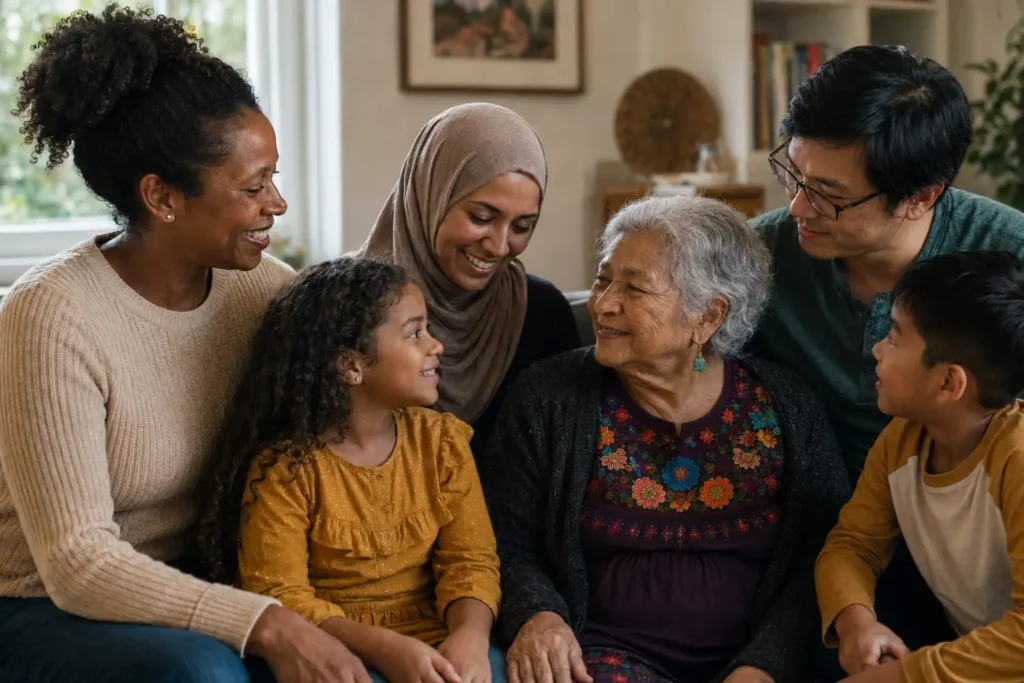
Every family carries a story, a culture, and a reality that deserve to be seen and respected.
Equity
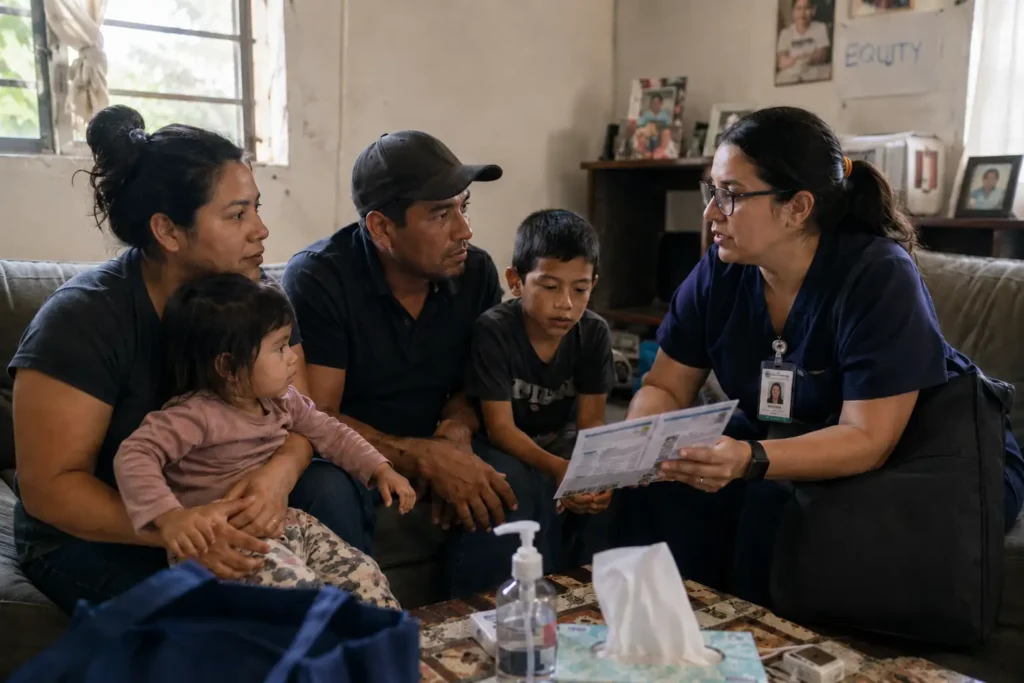
CareThrive exists for the families historically left out of the health conversation, always.
Excellence

Held to the same standard of care we would give our own families, verified before it’s published.
Our approach
Evidence-Based
Grounded in peer-reviewed research and verified by physicians, your family’s decisions deserve clinical accuracy.
Plain-Language
Written so every family member can understand it, no medical degree, no jargon to decode.
Culturally Relevant
Diaspora and underserved communities are the starting point, built in from the beginning, not added later.
Whole-Family
From a newborn’s first days to the decisions of aging parents, every member, every stage.
The gap we are closing
12%
of U.S. adults have proficient health literacy
81%
Higher below-basic literacy among immigrant minorities
137
Studies link language barriers to worse outcomes
Only 12% of American adults have proficient health literacy, and the burden falls hardest on immigrant and diaspora communities (Kutner et al., 2006). A nationwide study found that racial and ethnic minority immigrants had an 81% higher prevalence of below-basic health literacy than their non-immigrant counterparts (Sepassi et al., 2023). The gap is not a coincidence. It is a consequence, and CareThrive exists because it is documented, preventable, and unacceptable (Twersky et al., 2024).
References
Kutner, M., Greenberg, E., Jin, Y., & Paulsen, C. (2006). The health literacy of America’s adults: Results from the 2003 National Assessment of Adult Literacy (NCES 2006-483). National Center for Education Statistics, U.S. Department of Education.
Sepassi, A., Garcia, S., Tanjasiri, S., Lee, S., & Bounthavong, M. (2023). Predicted health literacy disparities between immigrant and US-born racial/ethnic minorities: A nationwide study. Journal of General Internal Medicine, 38(10), 2364–2373. https://doi.org/10.1007/s11606-023-08082-x
Twersky, S. E., Jefferson, R., Garcia-Ortiz, L., Williams, E., & Pina, C. (2024). The impact of limited English proficiency on healthcare access and outcomes in the U.S.: A scoping review. Healthcare, 12(3), 364. https://doi.org/10.3390/healthcare12030364