Breast Cancer: What Every Woman Needs to Know
Breast cancer symptoms, screening recommendations, and practical ways to protect your breast health
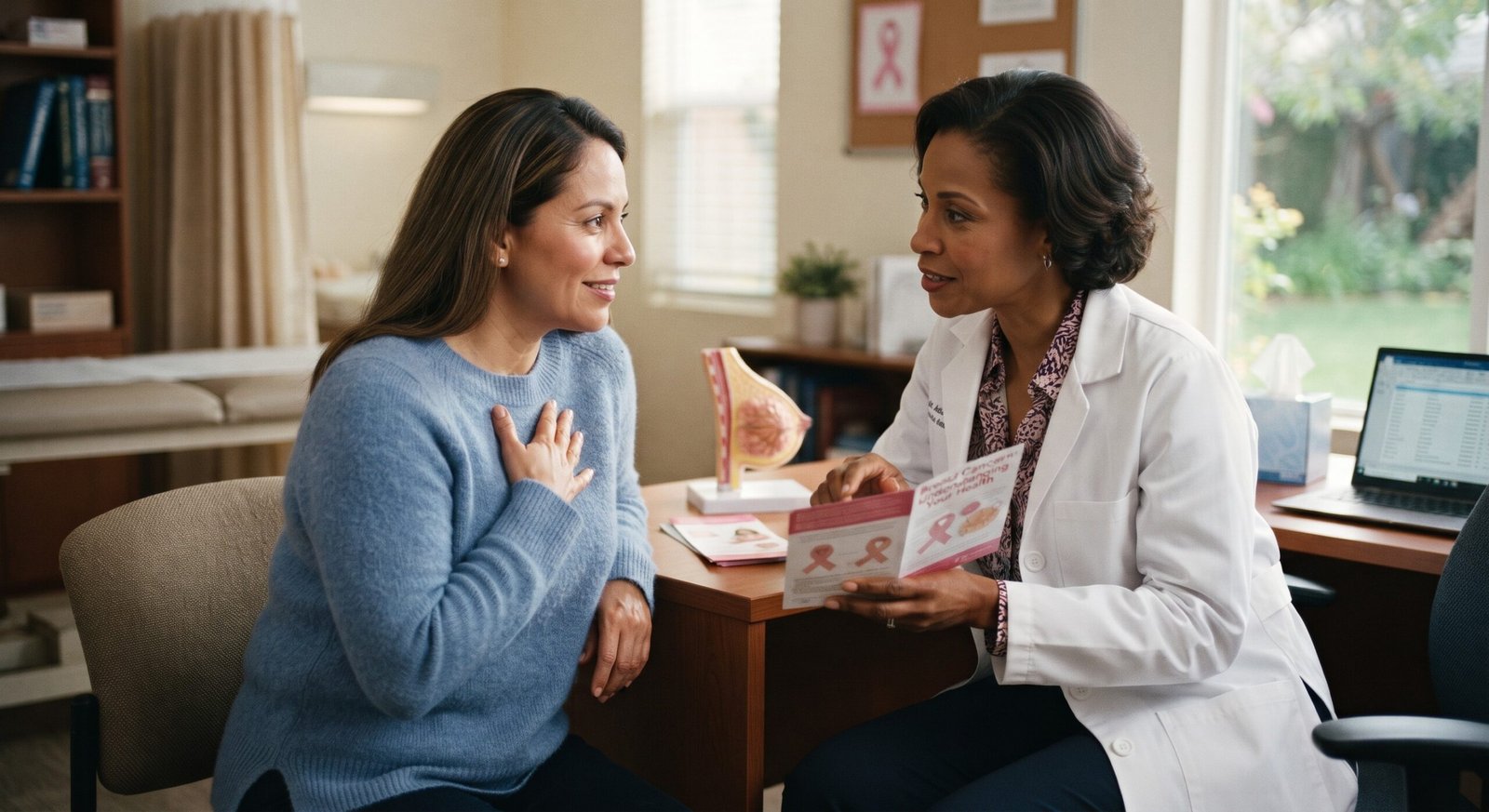
Breast cancer doesn’t always announce itself with a lump. Sometimes there’s a change in the skin, an unusual nipple discharge, or no noticeable symptom at all.
In 2024, approximately 2.4 million women worldwide were diagnosed with breast cancer, according to the World Health Organization (WHO, 2026).
Breast cancer care has improved a lot. Screening can find many cancers before symptoms develop, and treatment is increasingly tailored to the type of cancer a person has.
Still, women often have questions. When should you start getting mammograms? Does a family history mean you’ll develop breast cancer? And which breast changes deserve a closer look?
What is breast cancer?
Breast cancer develops when abnormal cells in the breast grow out of control. These cells may form a tumor, which can sometimes be felt as a lump. Some cancers remain confined to the breast, while others spread to nearby lymph nodes or distant organs.
Breast cancer isn’t one disease. Different types grow and respond to treatment in different ways.
A breast cancer diagnosis doesn’t automatically mean losing a breast or needing chemotherapy. Treatment depends on the cancer’s stage, its biological features, and the person’s health and preferences (National Cancer Institute [NCI], n.d.).
Although breast cancer mainly affects women, men can develop it too.
Who is at risk?
You can develop breast cancer without having a family history of the disease. WHO (2026) estimates that approximately 80% of breast cancers occur in women with no specific risk factors other than being female and getting older.
Some women face substantially higher risks because of their genes, medical history, or other circumstances. Knowing which factors apply to you can help guide conversations about screening.
Risk factors you can’t change.
According to the Centers for Disease Control and Prevention (CDC, 2026b), these include:
- Age: Breast cancer becomes more common as women get older.
- Family history: Having a close relative with breast or ovarian cancer may increase your risk.
- Inherited gene changes: Changes in genes such as BRCA1 and BRCA2 can raise breast cancer risk considerably.
- Dense breast tissue: Dense breasts are associated with increased risk and can make mammograms harder to interpret.
- Reproductive history: Starting menstrual periods early or reaching menopause later may affect lifetime risk.
- Previous breast conditions: Certain breast diseases or a history of breast cancer may increase future risk.
- Chest radiation: Radiation treatment to the chest, especially at a young age, can raise risk.
Risk factors you may be able to change
Research links breast cancer risk to alcohol consumption, physical inactivity, and excess body weight after menopause. Some forms of hormone therapy can also increase risk (CDC, 2026b).
These are risk factors, not predictions. Plenty of people with these risks never develop breast cancer, while others develop it despite healthy habits.
Breast cancer is never a sign that someone failed to take care of themselves.
Warning signs to watch for
Not every breast change means cancer. Most breast lumps are caused by noncancerous conditions, including cysts. But a new or unusual change should be checked by a healthcare professional.
The CDC (2026a) identifies several possible symptoms:
- A new lump in the breast or underarm.
- Swelling or thickening in part of the breast.
- Changes in breast shape or size that are unusual for you.
- Dimpling or puckering of the breast skin.
- Redness, flaky skin, or irritation around the breast or nipple.
- Nipple changes, including a nipple that suddenly turns inward or discharge that isn’t breast milk.
- Persistent or unusual pain in the breast or nipple.
Breast cancer doesn’t always hurt. Some women have no noticeable symptoms before a screening test finds something unusual.
Knowing how your breasts normally look and feel can help you recognize changes. You don’t need a strict breast self-exam routine to do this. If something feels different, arrange an appointment rather than waiting for your next routine mammogram.
When should you start breast cancer screening?
For women at average risk in the United States, the U.S. Preventive Services Task Force (USPSTF, 2024) recommends a mammogram every two years from ages 40 through 74.
A mammogram is a low-dose X-ray that looks for changes in breast tissue, including some cancers too small to feel.
The American Cancer Society (n.d.-a) offers a different schedule:
| Age | American Cancer Society guidance |
| 40–44 | Option to begin annual mammograms |
| 45–54 | Annual mammograms |
| 55 and older | Every two years or continue annually, while in good health with a life expectancy of at least 10 years |
Different organizations weigh screening benefits and harms differently. Mammograms can save lives, but they can also lead to extra tests, false alarms, and overdiagnosis, finding cancers that would never have caused harm.
Ask your clinician which screening schedule fits your health history and personal risk.
What if you’re under 40?
Most women under 40 who are at average risk don’t need routine mammograms. Women with BRCA gene changes, strong family histories, or certain other high-risk conditions may need screening earlier, sometimes including breast MRI.
A clinician can help assess your risk and decide whether genetic counseling would be useful.
What if you have dense breasts?
Dense tissue can make it harder to identify cancer on a mammogram. Depending on your overall risk, your clinician may discuss additional imaging, such as ultrasound or MRI.
However, the USPSTF (2024) found insufficient evidence to recommend routine supplemental imaging for every woman with dense breasts after a negative mammogram. A normal screening result also doesn’t mean you should ignore a new symptom.
How much does early detection matter?
Finding breast cancer before it spreads is associated with better outcomes.
The American Cancer Society (2026) reports the following five-year relative survival rates for women diagnosed with breast cancer in the United States between 2015 and 2021:
| Stage at diagnosis | Five-year relative survival |
| Localized: Cancer hasn’t spread beyond the breast | Greater than 99% |
| Regional: Cancer has spread to nearby tissue or lymph nodes | 87% |
| Distant: Cancer has spread to distant organs | 32% |
The 87% rate for regional cancer shows that cancer involving nearby lymph nodes is often very treatable. However, these figures describe groups of people, not individual outcomes.
What does five-year relative survival mean?
It compares survival among people with a particular cancer to survival among people of the same age and sex in the general population over five years.
It’s not a prediction of how long an individual will live. Cancer subtype, response to treatment, overall health, and access to care all affect outcomes.
Screening can’t prevent every breast cancer death. Still, regular mammograms can detect some cancers earlier, when treatment may be more effective.
Can you lower your breast cancer risk?
There’s no guaranteed way to prevent breast cancer. But some habits may help reduce your risk over time.
The CDC (2026c) recommends the following steps.
Stay physically active
Regular movement may lower breast cancer risk, and you don’t need a gym membership to get it. Walking, dancing, gardening, and swimming all count. Pick something you enjoy enough to keep doing.
Drink less alcohol, or avoid it.
Alcohol increases breast cancer risk, even at relatively low levels of consumption. If you drink, cutting back can reduce your exposure to this risk factor.
Support a healthy weight.
Excess body weight after menopause is associated with higher breast cancer risk. Aim for habits you can maintain rather than restrictive diets. Balanced meals can include the traditional foods and cooking styles you grew up with.
Discuss hormone use
Some menopausal hormone treatments and birth control methods can affect breast cancer risk. If you use these treatments, ask your healthcare professional how their benefits and risks apply to you. Don’t stop prescribed treatment without guidance.
Learn your family history.
Ask about breast, ovarian, pancreatic, and prostate cancer on both sides of your family, if that information is available.
Family history can help guide screening decisions. If you can’t access that information, tell your clinician. You can still discuss your risk.
What happens if a screening test finds something?
An abnormal mammogram doesn’t automatically mean cancer. Your healthcare team may recommend more detailed imaging or a biopsy, which involves taking a small sample of tissue for examination.
If breast cancer is confirmed, further tests help determine the cancer’s type and stage. Doctors may look for hormone receptors and a protein called HER2. These features help guide treatment decisions.
How is breast cancer treated?
Treatment varies from person to person and may include:
- Surgery: Removes cancerous tissue. Some women can have breast-conserving surgery instead of a mastectomy.
- Radiation therapy: Uses focused radiation to destroy cancer cells.
- Chemotherapy: Uses medicines to kill cancer cells or stop them from growing.
- Hormone therapy: Treats cancers that use hormones to grow.
- Targeted therapy: Acts on specific features of cancer cells, including HER2 in certain cancers.
- Immunotherapy: Helps the immune system fight some cancers, including certain triple-negative breast cancers.
Not everyone needs all these treatments. Many people receive a combination selected for their particular cancer (NCI, n.d.).
If you’ve received a diagnosis, ask your care team to explain the purpose of each recommended treatment and what alternatives are available.
Why access to care matters
Breast cancer outcomes differ sharply across countries. WHO (2026) estimates that in countries with a very high Human Development Index (HDI), about 1 in 12 women will develop breast cancer during their lifetime, and 1 in 71 will die from it. In low-HDI countries, approximately 1 in 27 women will develop breast cancer, yet 1 in 48 will die from the disease.
That means fewer women are diagnosed over their lifetimes in low-HDI countries, but a greater proportion of women diagnosed with breast cancer die from it. Differences in timely diagnosis, treatment availability, and health systems contribute to this gap.
According to the American Cancer Society’s Breast Cancer Facts & Figures 2024–2025, Black women in the United States have a 38% higher breast cancer mortality rate than White women, despite having a 5% lower incidence rate (American Cancer Society, 2024).
Differences in cancer subtype, stage at diagnosis, and access to timely, high-quality treatment contribute to this disparity. For women in immigrant and diaspora communities, language barriers, transportation costs, unfamiliar healthcare systems, or difficulty taking time off work can also delay care.
Where to find affordable breast cancer screening
If you’re in the United States and don’t have adequate health insurance, the CDC’s National Breast and Cervical Cancer Early Detection Program (NBCCEDP) may be able to help.
The program provides free or low-cost breast and cervical cancer screening and diagnostic services to eligible women with low incomes who are uninsured or underinsured. Eligibility depends on factors such as age, income, and insurance coverage.
CDC: Find a Screening Program Near You (CDC, 2026d).
If you live outside the United States, ask a local hospital, community health center, or public health agency about available screening services.
Frequently asked questions
Can you have breast cancer without a lump?
Yes. Some breast cancers cause skin or nipple changes without a noticeable lump. Others have no symptoms and are found during screening.
Does breast cancer always hurt?
No. Many breast cancers are painless. Breast pain is common and usually isn’t caused by cancer, but persistent or unusual pain deserves evaluation.
Can young women get breast cancer?
Yes, although it’s less common among younger women. Anyone who notices a new or unusual breast change should seek medical advice, regardless of age.
Can a mammogram miss breast cancer?
Yes. No screening test is perfect. Mammograms may miss some cancers, particularly in dense breast tissue. New symptoms should be evaluated even after a normal mammogram.
Five steps you can take today
You don’t have to change everything about your health at once. Start with what you can do.
- Get familiar with your breasts. Notice what’s normal for you and report changes.
- Ask about family history. Learn what you can, including cancers on your father’s side.
- Review your screening plan. If you’re 40 or older, check when your next mammogram is due. Discuss earlier screening if you’re at high risk.
- Choose a habit that works for you. A regular walk or drinking less alcohol is a reasonable place to start.
- Get a new symptom checked. You don’t have to figure out what it means on your own.
Share this article with someone who might find it helpful. And if you’ve been putting off a breast health conversation, make that appointment.
This article is for informational purposes only and does not constitute medical advice. Please consult a qualified healthcare provider for personalized guidance.
References
American Cancer Society. (2024). Breast cancer facts & figures 2024–2025. https://www.cancer.org/content/dam/cancer-org/research/cancer-facts-and-statistics/breast-cancer-facts-and-figures/2024/breast-cancer-facts-and-figures-2024.pdf
American Cancer Society. (2026, July 23). Survival rates for breast cancer. https://www.cancer.org/cancer/types/breast-cancer/understanding-a-breast-cancer-diagnosis/breast-cancer-survival-rates.html
American Cancer Society. (n.d.-a). American Cancer Society recommendations for the early detection of breast cancer. https://www.cancer.org/cancer/types/breast-cancer/screening-tests-and-early-detection/american-cancer-society-recommendations-for-the-early-detection-of-breast-cancer.html
American Cancer Society. (n.d.-b). Cancer information in Haitian Creole. https://www.cancer.org/cancer-information-in-other-languages/haitian-creole.html
Centers for Disease Control and Prevention. (2026a, September 22). Symptoms of breast cancer. https://www.cdc.gov/breast-cancer/symptoms/index.html
Centers for Disease Control and Prevention. (2026b, September 22). Breast cancer risk factors. https://www.cdc.gov/breast-cancer/risk-factors/
Centers for Disease Control and Prevention. (2026c, September 22). Reducing risk for breast cancer. https://www.cdc.gov/breast-cancer/prevention/index.html
Centers for Disease Control and Prevention. (2026d, September 18). Find a screening program near you. https://www.cdc.gov/breast-cervical-cancer-screening/about/screenings.html
National Cancer Institute. (n.d.). Breast cancer treatment. https://www.cancer.gov/types/breast/treatment
U.S. Preventive Services Task Force. (2024). Screening for breast cancer: U.S. Preventive Services Task Force recommendation statement. JAMA, 331(22), 1918–1930. https://doi.org/10.1001/jama.2024.5534
World Health Organization. (2026, July 3). Breast cancer. https://www.who.int/news-room/fact-sheets/detail/breast-cancer