5 Signs Your Hormones Are Out of Balance

This article is for informational purposes only and does not constitute medical advice. Please consult a qualified healthcare provider for personalized guidance.
Heavy periods. Breast tenderness. Pelvic pain. Changes in your cycle.
If you have searched these symptoms online, you may have come across the term “estrogen dominance.”
The phrase is often used to describe a pattern in which estrogen activity is high compared with progesterone. Researchers do study this kind of hormone imbalance in certain reproductive conditions. But “estrogen dominance” is not a diagnosis you can confirm from symptoms alone.
Many of the same symptoms can also happen with fibroids, endometriosis, perimenopause, polycystic ovary syndrome (PCOS), thyroid problems, medication effects, and other conditions.
Here are five signs that may point to a hormone-related issue, and what to do next.
1. Your Periods Become Heavy or Longer Than Usual
Estrogen helps build the uterine lining. Progesterone helps regulate that growth after ovulation.
When those signals are disrupted, the uterine lining can sometimes grow more than expected. This may contribute to heavier or longer bleeding in some people.
Research shows that changes in estrogen and progesterone signaling are involved in conditions such as endometriosis, fibroids, and other gynecologic disorders (MacLean & Hayashi, 2022).
Heavy bleeding by itself isn’t proof that estrogen is too high.
Other causes can include fibroids, thyroid problems, bleeding disorders, medications, pregnancy-related changes, and the transition toward menopause.
Talk with a healthcare professional if your bleeding becomes much heavier than usual or begins interfering with daily life.
2. Your Menstrual Cycle Becomes Irregular
Hormone levels naturally rise and fall throughout the menstrual cycle.
Ovulation, stress, age, changes in body weight, PCOS, thyroid conditions, and perimenopause can all affect when your period arrives.
That is why an irregular cycle is better viewed as a clue than as proof of “estrogen dominance.”
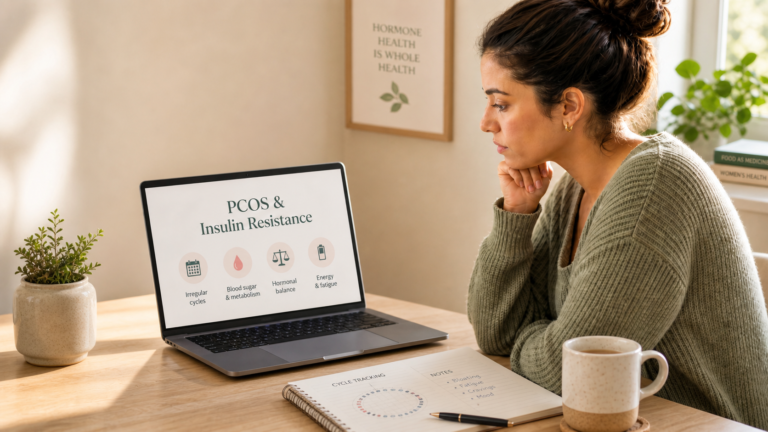
Tracking your cycle can help. Write down when bleeding starts, how long it lasts, how heavy it is, and any symptoms that appear alongside it.
Patterns over several months may give you and your healthcare provider more useful information than a single symptom.
3. You Have Ongoing Pelvic Pain or Painful Periods
Pelvic pain can have many causes, including endometriosis.
In endometriosis, research has found changes in both estrogen and progesterone signaling within affected tissue. These changes may help explain why the tissue continues to grow and cause inflammation or pain (Marquardt et al., 2019).
Painful periods can’t tell you on their own whether you have endometriosis or excess estrogen.
But pain that regularly disrupts work, school, sleep, exercise, or daily activities deserves medical attention.
Severe menstrual pain should not simply be dismissed as something you have to live with.
4. You Notice Weight or Metabolic Changes
Hormones can affect appetite, blood sugar control, fat storage, muscle mass, and energy use.
Body fat can also affect hormone metabolism. Fat tissue contains an enzyme called aromatase, which helps the body make certain forms of estrogen.
Weight gain, however, is not a reliable marker of estrogen dominance.
Sleep, stress, age, menopause, medications, activity levels, thyroid function, and insulin resistance can all play a role.
If your weight changes suddenly or without a clear reason, a healthcare professional can help identify possible causes rather than assuming a single hormone is responsible.
5. Your Hormone-Related Symptoms Keep Returning
Breast tenderness, changes in menstrual symptoms, pelvic discomfort, and fertility concerns can sometimes occur alongside changes in reproductive hormones.
The pattern matters.
Symptoms that return month after month, become more intense, or start affecting your quality of life are worth discussing with a healthcare professional.
The more useful question is what is causing your symptoms, not whether your estrogen is simply “too high.”
What Does “Estrogen Dominance” Actually Mean?
Estrogen is not a harmful hormone that needs to be removed from the body.
It plays important roles in reproductive health, bones, the brain, and other body systems.
Progesterone also has important functions, especially after ovulation.
Researchers use terms such as progesterone resistance, unopposed estrogen, or changes in estrogen signaling when studying specific conditions. These terms describe what is happening in a certain tissue or health condition.
That is more precise than using “estrogen dominance” as a catch-all explanation for fatigue, bloating, mood changes, weight gain, or menstrual symptoms.
Does Gut Health Affect Estrogen?
Scientists are studying the connection between estrogen and the gut microbiome, the community of bacteria and other microorganisms living in the digestive tract.
Some gut bacteria help process estrogen. Research suggests that changes in the gut microbiome may influence how estrogen is metabolized and circulated in the body (Baker et al., 2017).
This is promising science, but it is too early to say that macrobiotics can treat estrogen dominance.
For now, supporting general gut health is a more evidence-based goal.
Helpful habits include eating a variety of fiber-rich foods such as:
- Beans and lentils
- Vegetables
- Fruits
- Whole grains
- Nuts and seeds
These foods support digestive and metabolic health even without making claims about “detoxing” estrogen.
What About Soy and Phytoestrogens?
Soy contains natural plant compounds called isoflavones.
Isoflavones can interact with estrogen receptors in the body, but they are not the same as human estrogen. Their effects are more complex than simply raising estrogen levels.
Research has explored soy and other plant-based compounds for menopausal symptoms and metabolic health. Some findings are promising, but results vary across studies (Bolgova et al., 2025).
Whole soy foods such as tofu, tempeh, edamame, and soy milk can fit into a balanced diet for most people.
Still, that evidence does not support giving everyone with hormone symptoms a soy or isoflavone supplement.
What Can You Do to Support Hormone Health?
There is no universal “estrogen detox,” but several everyday habits support overall hormone and metabolic health.
Eat a balanced, fiber-rich diet.
Try to include vegetables, fruits, beans, whole grains, nuts, seeds, and enough protein.
Choose foods that fit your culture, budget, and access. Healthy eating does not require expensive specialty products.
Move your body regularly.
Walking, dancing, cycling, strength exercises, household activity, and other forms of movement can support metabolic health and sleep.
The best activity is one that is safe, realistic, and sustainable for you.
Protect your sleep
Sleep affects appetite, blood sugar regulation, mood, and overall well-being.
If your work schedule makes consistent sleep difficult, focus on what you can control. A dark room, a regular sleep window, and limiting interruptions can still help.
Manage stress in ways that fit your life
Stress does not directly prove that you have a hormone imbalance.
But ongoing stress can affect sleep, eating patterns, menstrual symptoms, and quality of life.
Helpful options may include exercise, counseling, relaxation practices, faith or community support, time outdoors, and social connection.
Be Careful With “Hormone Balancing” Supplements
Online products may promise to “flush out estrogen,” “reset hormones,” or correct estrogen dominance.
Evidence for many of these products is limited.
Supplements may also interact with medications or affect hormone-sensitive health conditions.
A 2025 review found that several dietary and lifestyle approaches may influence estrogen-related symptoms in aging women. The researchers also noted gaps in study quality, long-term safety, and dosing guidance (Bolgova et al., 2025).
Talk with a qualified healthcare professional before using hormone-related supplements, especially if you take medications, are pregnant or trying to conceive, or have a history of a hormone-sensitive condition.
When Should You Talk With a Healthcare Provider?
Consider getting medical advice if you have:
- Very heavy or prolonged periods
- Bleeding between periods
- Bleeding after menopause
- Persistent pelvic pain
- Period pain that disrupts normal activities
- Periods that suddenly become very irregular
- Difficulty becoming pregnant
- Symptoms that keep getting worse
Seek prompt medical care for severe bleeding, fainting, sudden severe pain, or other symptoms that feel urgent.
A healthcare professional may look at your menstrual history, medications, pregnancy possibility, thyroid function, anemia, fibroid, PCOS, endometriosis, menopause, and other possible causes.
Hormone tests can sometimes help, but hormone levels change throughout the menstrual cycle. One blood test may not tell the whole story.
Your Next Step
Start by tracking what you notice.
Write down changes in your cycle, bleeding, pain, sleep, medications, and other symptoms for a few months if possible. Bring that information to a healthcare visit.
You can also focus on supportive habits, such as regular movement, adequate sleep, fiber-rich foods, and stress management, as you seek answers.
Save this article so you have the symptom checklist and questions handy for your next healthcare visit.
You do not need to chase every hormone trend online. Reliable information, careful symptom tracking, and the right medical evaluation can help you make more informed decisions.
Frequently Asked Questions
Is estrogen dominance a real medical diagnosis?
“Estrogen dominance” is commonly used in wellness discussions, but it is not one specific diagnosis based on symptoms alone. Researchers do study estrogen-progesterone imbalance and altered hormone signaling in certain reproductive disorders.
Can high estrogen cause fibroids?
Fibroids respond to reproductive hormones, and both estrogen and progesterone are involved in their growth. Having fibroids does not automatically mean your blood estrogen level is abnormally high.
Can food lower estrogen naturally?
A balanced diet can support normal hormone and metabolic function. There is no proven food or diet that universally “detoxes” excess estrogen.
Should I take supplements for estrogen dominance?
Not without considering your individual health situation. Evidence for many hormone-balancing supplements is limited, and some can interact with medications or affect hormone-sensitive conditions.
CareThrive Takeaway
Hormone symptoms are worth paying attention to, but they deserve more than a trendy label.
If your periods, pelvic pain, or other reproductive symptoms have changed, track what you are experiencing and seek medical guidance when needed.
CareThrive helps you understand your health, ask better questions, and make decisions based on evidence rather than fear.
This article is for informational purposes only and does not constitute medical advice. Please consult a qualified healthcare provider for personalized guidance.
References
Baker, J. M., Al-Nakkash, L., & Herbst-Kralovetz, M. M. (2017). Estrogen–gut microbiome axis: Physiological and clinical implications. Maturitas, 103, 45–53. https://doi.org/10.1016/j.maturitas.2017.06.025
Bolgova, O., Shypilova, I., & Mavrych, V. (2025). Natural strategies to optimize estrogen levels in aging women: Mini review. Frontiers in Aging, 6, 1706117. https://doi.org/10.3389/fragi.2025.1706117
MacLean, J. A., II, & Hayashi, K. (2022). Progesterone actions and resistance in gynecological disorders. Cells, 11(4), 647. https://doi.org/10.3390/cells11040647
Marquardt, R. M., Kim, T. H., Shin, J. H., & Jeong, J. W. (2019). Progesterone and estrogen signaling in the endometrium: What goes wrong in endometriosis? International Journal of Molecular Sciences, 20(15), 3822. https://doi.org/10.3390/ijms20153822