
Signs You Have Sleep Apnea — And What to Do About It
Evidence-Based Health Education
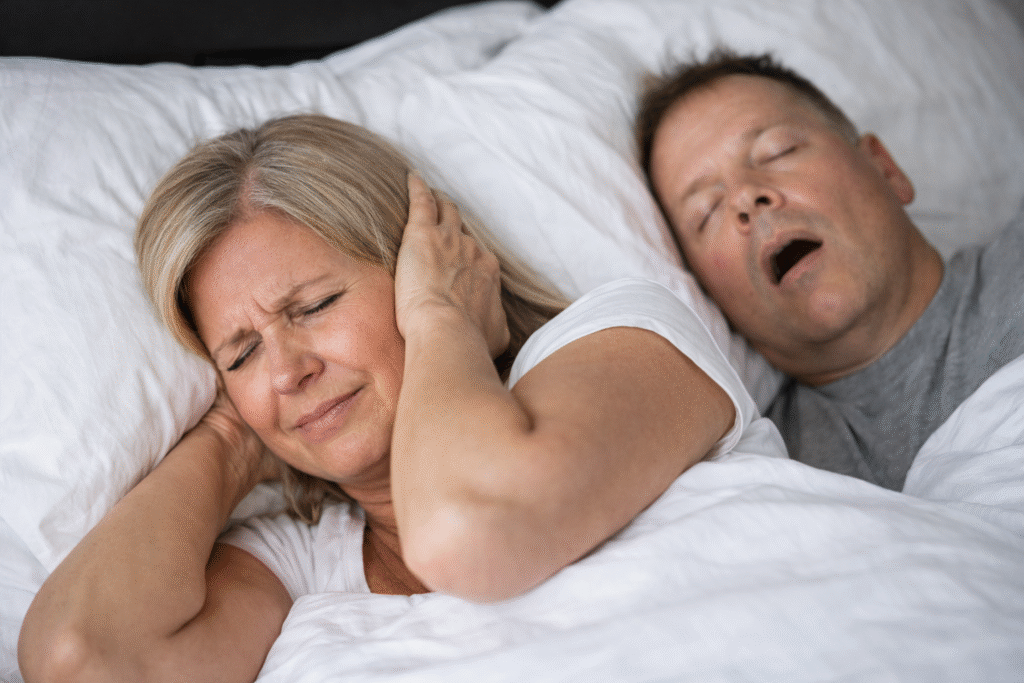
Sleep apnea is one of the most common and most overlooked sleep disorders in adults.
Many people live with it for years without knowing. They assume their symptoms are just stress, aging, or “poor sleep.” But untreated sleep apnea is more than snoring. It is a medical condition that affects breathing, oxygen levels, heart health, and brain function.¹
Understanding the signs early can protect your long-term health.
What Is Sleep Apnea?
Sleep apnea is a condition that disrupts normal breathing during sleep.¹
It occurs when airflow repeatedly decreases or stops during sleep. The most common type is Obstructive Sleep Apnea (OSA).¹
In OSA, the muscles in the back of the throat relax too much during sleep. When this happens, the airway narrows or becomes blocked.¹ Air cannot move normally in and out of the lungs.
Breathing may stop for 10–30 seconds, sometimes longer.¹ These breathing interruptions are called:
- Apneas (complete pauses in breathing)
- Hypopneas (partial reductions in airflow)¹
In moderate or severe cases, this can happen dozens of times per hour.
Each time breathing pauses:
- Oxygen levels drop
- Carbon dioxide rises
- The body activates its stress response
- The brain briefly awakens to restart breathing¹
These awakenings are usually so short that you do not remember them. But they repeatedly interrupt deep sleep.
Over time, this cycle causes fragmented sleep, cardiovascular strain, and metabolic stress.
Sleep apnea is like holding your breath many times every hour, all night long, without realizing it.
How Common Is Sleep Apnea?
Sleep apnea affects an estimated 5–10% of adults worldwide, and rates are higher in older adults and those with obesity.²
It is more common in:
- Adults over 40.²
- People who are overweight²
- Men
- Women after menopause³
However, many cases remain undiagnosed.
Why Many People Do Not Know They Have It
Symptoms of sleep apnea often develop gradually.
People adjust to feeling tired. They blame:
- Aging
- Stress
- Hormones
- Busy schedules
Snoring is often treated lightly, even joked about. But chronic loud snoring is one of the strongest clinical indicators of obstructive sleep apnea.¹
In many cases, a bed partner first notices:
- Pauses in breathing
- Gasping episodes
- Restless sleep⁴
People who sleep alone may not recognize these warning signs.
Night-Time Signs of Sleep Apnea
Loud, Persistent Snoring
Snoring occurs when Air moves through a narrowed airway, causing the soft tissues to vibrate.¹ ⁵
Not everyone who snores has sleep apnea. But most people with OSA snore regularly and loudly.¹
Witnessed Breathing Pauses
A partner may observe:
- Silence
- No breathing
- Choking or gasping
- Then loud snoring again⁴
This pattern strongly suggests OSA.
Sudden Awakenings with Choking
These occur when the airway collapses, and the brain must rapidly restore breathing.⁴
Restless or Fragmented Sleep
Repeated micro-awakenings prevent deep restorative sleep and REM sleep, the stage linked to dreaming and memory processing.⁶
Frequent Night-Time Urination (Nocturia)
Drops in oxygen can trigger hormonal signals that increase urine production.⁶ Many patients do not realize this can be linked to sleep apnea.
Night Sweats
Activation of the sympathetic nervous system (the body’s stress response system) during breathing pauses may cause sweating.⁶
Daytime Signs You Should Not Ignore
Sleep apnea affects more than just your night; it affects your entire day.
Excessive Daytime Sleepiness
Repeated sleep disruption leads to reduced alertness and slower reaction times.¹
Sleep apnea is associated with an increased risk of motor vehicle accidents.⁷
Non-Restorative Sleep
You may sleep 7–8 hours, but wake up feeling unrefreshed.
Morning Headaches
Often caused by overnight fluctuations in oxygen levels and carbon dioxide buildup.⁴
Cognitive and Mood Changes
Untreated OSA can affect:
- Attention
- Memory
- Decision-making
- Emotional regulation⁶
Chronic sleep fragmentation has been associated with increased risk of cognitive decline.⁶
Sleep Apnea in Women: Why It Is Often Missed
Sleep apnea presents differently in women and is frequently underdiagnosed.⁶
Women are less likely to report loud snoring. Instead, they may experience:
- Insomnia
- Chronic fatigue
- Anxiety
- Depression
- Morning headaches
- Mood changes
Because symptoms differ, women are sometimes misdiagnosed with primary mood disorders or stress-related conditions.
After menopause, estrogen levels decline, and the risk of OSA increases significantly.³ Hormonal changes influence airway muscle tone, fat distribution, and breathing stability.
Some women experience REM-predominant OSA, meaning breathing problems are worse during REM sleep.⁶ This pattern may be under-detected by standard screening tools.
During pregnancy, fluid retention and hormonal changes may increase airway narrowing. Sleep-disordered breathing in pregnancy has been associated with gestational hypertension and diabetes.⁸
Women with polycystic ovary syndrome (PCOS) also have increased OSA risk due to insulin resistance and hormonal imbalance.⁹
Awareness is critical. Fatigue in women should not be dismissed without evaluation.
Risk Factors for Sleep Apnea
Major risk factors include:
- Obesity¹ ²
- Large neck circumference
- Craniofacial structure differences
- Hypertension¹
- Type 2 diabetes¹
- Atrial fibrillation¹
- Prior stroke¹
- Alcohol use²
- Smoking²
Obesity is the strongest modifiable risk factor. Fat deposition around the airway increases its tendency to collapse during sleep.
Why Sleep Apnea Is Serious
Sleep apnea is not just about snoring.
Repeated drops in oxygen and stress system activation place strain on the cardiovascular system.⁶ Over time, this contributes to:
- Elevated blood pressure
- Vascular inflammation
- Damage to the blood vessel lining (endothelial dysfunction)
- Insulin resistance
Untreated OSA is linked to:
- Hypertension¹
- Stroke¹
- Coronary artery disease¹
- Heart failure¹
- Atrial fibrillation¹
- Type 2 diabetes¹
- Increased mortality risk²
Sleep apnea is a systemic condition affecting the heart, brain, and metabolism.
How Sleep Apnea Is Diagnosed
Diagnosis requires objective sleep testing.¹
In-Lab Polysomnography
This is the gold standard test.¹ It measures:
- Brain activity (EEG — electroencephalogram, which records electrical brain signals)
- Oxygen levels
- Airflow
- Breathing effort
- Heart rhythm
- Body movement
Home Sleep Apnea Testing
Home testing is appropriate for many uncomplicated adults.¹ It measures airflow and oxygen levels but does not record full brain activity.
Understanding Your Results
The Apnea-Hypopnea Index (AHI) measures the number of breathing interruptions per hour.¹
- 5–14 events/hour = Mild
- 15–29 = Moderate
- 30 or more = Severe
Higher AHI levels correlate with increased cardiovascular risk.
Oxygen desaturation, how low oxygen levels drop, is also important in assessing severity.
Treatment decisions consider both AHI and symptom burden.
Treatment Options
Treatment depends on:
- Severity¹⁰
- Symptoms
- Coexisting medical conditions
- Patient preference
There is no one-size-fits-all solution.
CPAP: First-Line Treatment
Continuous Positive Airway Pressure (CPAP) is the recommended first-line treatment for moderate to severe OSA.¹ ¹⁰
CPAP delivers gentle air pressure through a mask to prevent airway collapse.
Benefits include:
- Reduced AHI
- Improved daytime alertness
- Lower blood pressure
- Reduced cardiovascular strain¹ ¹⁰
Adherence is essential for maximum benefit.
Other Treatment Options
Oral Appliances
Mandibular advancement devices reposition the jaw forward.¹⁰ Effective for selected mild-to-moderate cases.
Positional Therapy
Helpful when apnea occurs mainly while sleeping on the back.¹⁰
Surgery
It may be considered when structural airway obstruction is significant.¹⁰
Hypoglossal Nerve Stimulation
An implanted device that improves tongue muscle tone during sleep.¹⁰
Weight Loss and Lifestyle Changes
Weight reduction decreases airway fat volume and apnea severity.¹ Even a 5–10% weight loss may significantly improve symptoms.
Other supportive measures:
- Avoid alcohol before bedtime²
- Stop smoking²
- Maintain a consistent sleep schedule
Lifestyle changes support treatment but do not replace medical evaluation.
When Should You Seek Medical Evaluation?
You should seek medical evaluation if you:
- Snore loudly and regularly
- Wake up gasping or choking
- Feel excessively sleepy during the day
- Have high blood pressure with loud snoring
- Experience unexplained fatigue
Early diagnosis improves long-term outcomes.¹
Final Thoughts
Sleep apnea is common and often overlooked.²
It is linked to serious cardiovascular and metabolic risks.¹
But it is diagnosable.¹
And it is treatable.¹ ¹⁰
Recognizing the signs is the first step toward protecting your brain, your heart, and your long-term health.
If you suspect sleep apnea, speak with a qualified healthcare professional about testing.
References
- Gottlieb DJ, Punjabi NM. Diagnosis and Management of Obstructive Sleep Apnea: A Review. JAMA. 2020;323(14):1389-1400.
- Hirani R, et al. A Scoping Review of Sleep Apnea. Life. 2023;13(1).
- Gharibeh T, Mehra R. Obstructive Sleep Apnea Syndrome: Natural History, Diagnosis, and Treatment. Nat Sci Sleep. 2010;2:233-242.
- Pascoe J, et al. Obstructive Sleep Apnea: Clinical Presentation and Differential Diagnosis. 2021.
- Patel SR. Obstructive Sleep Apnea. Ann Intern Med. 2019;171(11):ITC81-ITC96.
- Stansbury RC, Strollo PJ. Clinical Manifestations of Sleep Apnea. J Thorac Dis. 2015;7(9):E298-E310.
- Myśliwiec N, et al. Diagnosis and Treatment of Obstructive Sleep Apnea. 2025.
- Facco FL, et al. Sleep-Disordered Breathing in Pregnancy. Obstet Gynecol. 2017.
- Tasali E, et al. Obstructive Sleep Apnea in Polycystic Ovary Syndrome. J Clin Endocrinol Metab. 2008.
- Randerath W, et al. Current and Novel Treatment Options for Obstructive Sleep Apnoea. ERJ Open Res. 2022;8(2):00164-2022.