7 Iron-Rich Foods That Protect Your Family’s Energy and Focus
This article is for informational purposes only and does not constitute medical advice. Please consult a qualified healthcare provider for personalized guidance.
A child who seems tired at soccer practice. A teen who is always drained after school. A parent who blames stress for feeling worn out every day. Low energy can have many causes, but iron is one nutrient families should not overlook.
Iron helps the body make hemoglobin, the protein in red blood cells that carries oxygen. It also supports growth, brain development, muscle function, and immune health. That makes it important at every age, from babies starting solids to adults trying to stay healthy through busy seasons of life (National Institutes of Health [NIH], 2025; Centers for Disease Control and Prevention [CDC], 2026).
The good news is that preventing low iron often starts with everyday meals. Families do not need perfect diets or expensive specialty foods. What helps most is a steady pattern: include iron-rich foods often, pair plant-based iron with foods rich in vitamin C, and pay extra attention during life stages when iron needs rise, like infancy, adolescence, and pregnancy. Research reviews and public health guidance support this food-first approach (Domellöf et al., 2024; NIH, 2025).
Why iron matters for the whole family
Iron deficiency is among the most common nutrient deficiencies worldwide. When the body does not get enough iron, it can struggle to make healthy red blood cells. Over time, this can lead to iron-deficiency anemia. In children, inadequate iron may affect growth, learning, attention, and neurodevelopment. In adults, it may present as fatigue, weakness, reduced exercise tolerance, or difficulty concentrating. These symptoms are not unique to iron deficiency, but iron status is an important part of the picture (NIH, 2025).
Some family members need closer attention than others. NIH identifies infants, frequent blood donors, pregnant people, teen girls and women with heavy menstrual bleeding, and people with certain gastrointestinal conditions as groups at higher risk of iron inadequacy. People following vegetarian diets may also need more total iron because nonheme iron is less readily absorbed than heme iron (NIH, 2025).
That is why families benefit from knowing two things: which foods contain iron, and how to help the body absorb more of it.
Heme vs nonheme iron: the simple version
Iron in food comes in two forms: heme iron and nonheme iron. Heme iron comes from animal foods and is absorbed more efficiently than nonheme iron. Nonheme iron comes from plant foods and iron-fortified foods, and its absorption is more easily affected by the rest of the meal. NIH explains that meat, seafood, and poultry contain both heme and nonheme iron, while plant foods and fortified products provide nonheme iron (NIH, 2023, 2025).
Heme iron foods
These foods tend to give the body iron in a form it can use more easily:
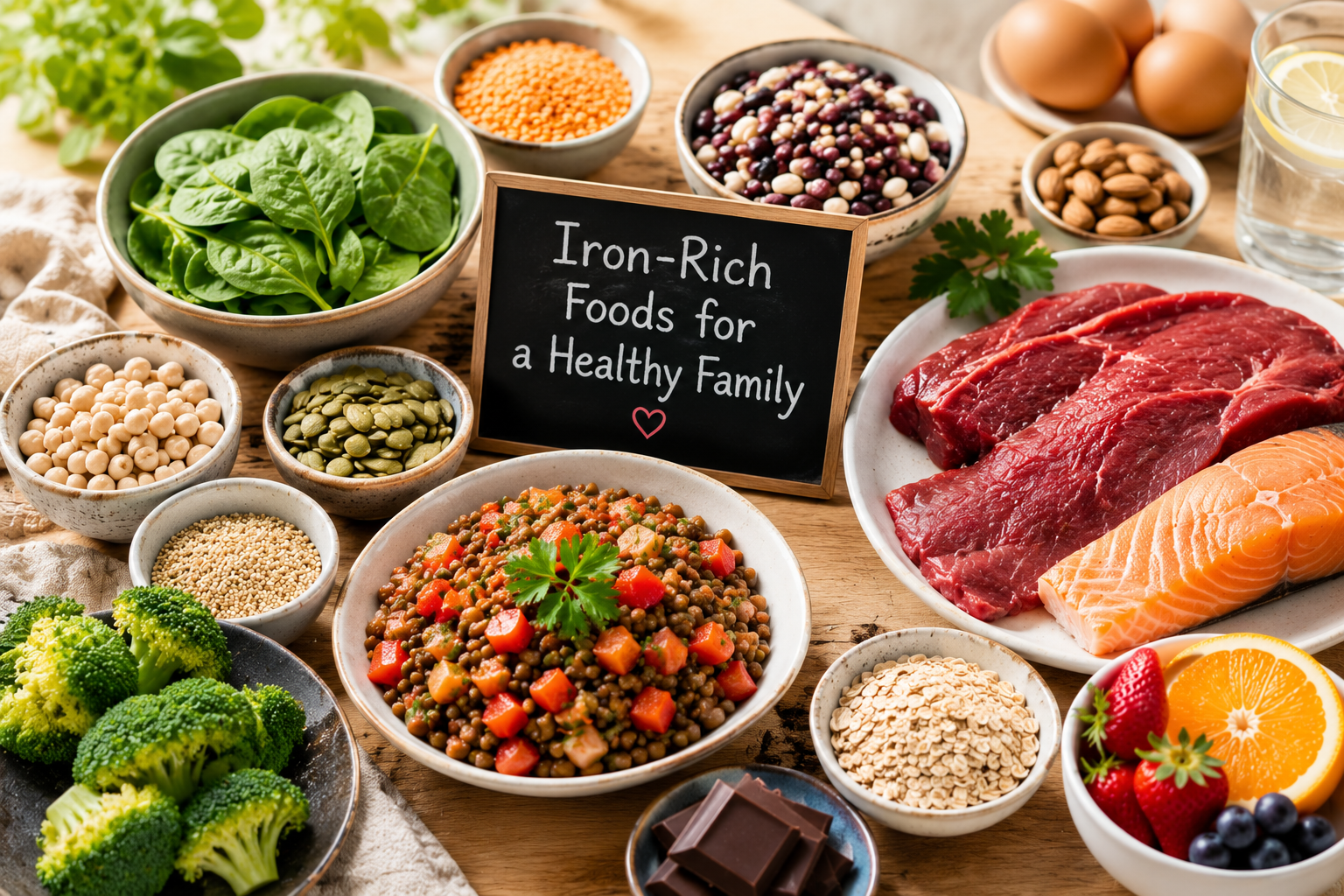
- Beef
- Lamb
- Pork
- Chicken and turkey
- Fish and shellfish
- Eggs
CDC lists red meat, seafood, poultry, and eggs among heme iron foods that can support healthy development, especially in young children who are starting to eat a wider range of foods (CDC, 2026).
Nonheme iron foods
Plant foods matter too, especially in households that eat less meat or follow vegetarian eating patterns. Helpful sources include:
- Beans and lentils
- Tofu and soy foods
- Iron-fortified cereals and breads
- Nuts and seeds
- Dark green leafy vegetables
- Whole grains
- Dried fruits, such as raisins or apricots
NIH and the Nordic Nutrition Recommendations background review describe legumes, whole grains, fortified cereals, dark green vegetables, nuts, seeds, and dried fruits as useful nonheme iron sources in mixed and plant-forward diets (Domellöf et al., 2024; NIH, 2025; Chouraqui, 2022).
The meal-planning trick that matters most
A meal can contain iron and still not deliver much usable iron to the body. That is where meal pairing matters.
What helps absorption
Vitamin C improves the absorption of nonheme iron. NIH’s consumer guidance notes that the body absorbs iron from plant sources better when those foods are eaten with vitamin C-rich foods such as citrus fruits, strawberries, sweet peppers, tomatoes, and broccoli. Meat, poultry, and seafood can also enhance nonheme iron absorption when eaten in the same meal (NIH, 2023).
That means small pairings can make a real difference:
- Beans with tomatoes or salsa
- Iron-fortified cereal with berries
- Lentils with bell peppers
- Tofu with broccoli
- Spinach with orange slices or citrus dressing
These combinations do not need to be fancy. They need to happen often enough to become part of normal family meals.
What can get in the way?
Some meal components make iron harder to absorb. NIH notes that phytates in grains and beans, some polyphenols in plant foods and drinks, and calcium can reduce iron bioavailability. Tea and coffee are common examples that can interfere with iron absorption when taken with iron-rich meals. This does not mean families should avoid nutritious foods like beans, whole grains, or dairy. It just means timing helps. Drinking tea or coffee between meals instead of with meals may support better iron absorption (NIH, 2025; Domellöf et al., 2024).
A good rule is simple: build balanced meals, not perfect ones. Include an iron source, add a fruit or vegetable rich in vitamin C, and avoid putting absorption blockers front and center at every iron-rich meal.
7 iron-rich foods families can use every week
1. Beans and lentils
Beans and lentils are affordable, versatile, and widely used across many cultures. They provide nonheme iron, fiber, and plant protein. They work in soups, stews, curries, rice dishes, tacos, salads, and spreads like hummus. Pair them with tomatoes, peppers, or citrus to help the body absorb more of their iron (Domellöf et al., 2024; NIH, 2023).
2. Iron-fortified cereals
Fortified cereals are one of the most practical ways to add iron, especially for infants, toddlers, and busy families. Public health guidance and research reviews support the use of iron-fortified products as an effective strategy when needs are high or diets are limited (Csölle et al., 2022; World Health Organization [WHO], 2023). For families shopping on a budget, a fortified cereal with moderate sugar can be a useful tool, not a shortcut.
3. Eggs
Eggs are convenient, lower-cost, and easy to serve to different age groups. They contain iron and can fit into breakfast, lunch, or dinner. Pairing eggs with fruit, tomatoes, or other produce can help round out the meal. CDC includes eggs among iron-containing foods for young children (CDC, 2026).
4. Lean red meat
Red meat is a concentrated source of heme iron, which the body absorbs more efficiently than nonheme iron. Childhood nutrition reviews consistently identify red meat and other animal-source foods as important contributors to iron intake, especially during growth (Chouraqui, 2022; Domellöf et al., 2024). Families do not need large portions or daily servings to benefit. Even modest amounts can help, especially when paired with plant foods in mixed meals.
5. Poultry and seafood
Chicken, turkey, and seafood can also contribute useful iron. NIH notes that meat, seafood, and poultry provide both heme and nonheme iron. They can also help improve the absorption of iron from beans, grains, and vegetables eaten in the same meal (NIH, 2023, 2025).
6. Tofu, nuts, and seeds
Tofu, pumpkin seeds, sesame, and other nuts and seeds can help families who want more plant-based sources of iron. These foods may not be as readily absorbed as heme sources, but they still count. Adding vitamin C-rich produce helps. Tofu stir-fried with broccoli or beans, served with a tomato-based sauce, is an easy example (Domellöf et al., 2024; Chouraqui, 2022).
7. Dark green vegetables and dried fruit
Dark green vegetables and dried fruits are not the highest-impact iron sources on their own, but they can add up when combined with other sources. Reviews identify dark green vegetables and dried fruits as useful sources of support, especially in diets with little or no meat (Chouraqui, 2022; Domellöf et al., 2024). They work best when combined with meals that also include fortified foods, legumes, or animal-source iron.
Age-specific guidance for families
Infants: 6 to 12 months
Around 6 months of age, infants need a source of iron beyond breast milk alone. CDC states that at about 6 months, infants require iron from iron-rich foods, iron-fortified cereals, or iron supplement drops if a clinician recommends them. WHO also recommends starting complementary foods at 6 months alongside continued breastfeeding (CDC, 2026; WHO, 2023).
Independent clinical guidance supports offering iron-rich complementary foods from about 6 months, including meat products and/or iron-fortified foods. This is one of the most important nutrition steps in the first year because iron needs in later infancy are high (Domellöf et al., 2014; WHO, 2023).
Good options include:
- Iron-fortified infant cereal
- Pureed or finely shredded meat
- Mashed beans or lentils
- Tofu
- Egg, if introduced safely and tolerated
- Fruit or vegetables rich in vitamin C, alongside plant-based iron foods
A note on cow’s milk before age 1
CDC says cow’s milk should not be given as a drink before 12 months of age. It may increase the risk of intestinal bleeding, exceed a baby’s kidneys’ capacity to handle protein and mineral load, and fail to provide the right nutrient balance for infants. CDC also notes that plain whole cow’s milk can be introduced after 12 months (CDC, 2026).
Toddlers and preschoolers
Toddlers are famous for food jags and picky eating. That can be stressful, especially when iron still matters for brain development and growth. The goal at this stage is not perfection. It is repetition and variety.
Family-friendly ideas include:
- Oatmeal or fortified cereal with berries
- Scrambled eggs with fruit
- Lentil soup with tomatoes
- Ground meat with beans
- Hummus with soft vegetables
- Tofu with rice and peppers
CDC guidance emphasizes offering a range of nutritious foods and building healthy habits rather than focusing on a single “superfood.” Once children are 12 months old, whole cow’s milk can be included in meals, but it should not crowd out the rest of the diet (CDC, 2026).
School-age kids
For school-age children, routine matters more than novelty. A reliable pattern might include a fortified breakfast, one or two iron-containing foods later in the day, and fruits or vegetables high in vitamin C across meals and snacks. Childhood nutrition reviews support a diversified diet, along with fortified foods when needed (Chouraqui, 2022).
Teens
Adolescence is a major risk period for iron deficiency, especially for girls, athletes, and teens with highly restrictive diets. A 2024 review in Advances in Nutrition describes iron deficiency in adolescents as common and challenging, and notes that plant-only diets rely on nonheme iron, which has lower bioavailability than heme iron. NIH also identifies teen girls and women with heavy menstrual bleeding as higher-risk groups (Cohen & Powers, 2024; NIH, 2025).
Meals that can help include:
- Chili with beans and beef or turkey
- Rice and beans with salsa
- Tofu stir-fry with broccoli
- Eggs with fortified toast
- Trail mix with pumpkin seeds and dried fruit
- Fortified cereal with strawberries
For teens who drink tea, coffee, or energy drinks, it’s best not to have them with every iron-rich meal (NIH, 2025).
Adults and pregnancy
Adults still need iron, but needs vary by age, sex, and life stage. Premenopausal women and pregnant people usually need more than men and postmenopausal women. NIH also notes that vegetarian diets may require higher iron intake because the iron in plant foods is less bioavailable. Pregnancy deserves special attention because needs rise, and food alone may not always be enough. Prenatal care helps determine whether diet changes, supplements, or lab checks are needed (NIH, 2025).
When fortified foods are a smart option
Fortified foods are an evidence-based public health tool. WHO’s complementary feeding guidelines include fortified complementary foods among strategies for young children, and a 2022 systematic review and meta-analysis found that micronutrient-fortified complementary foods reduced the risk of anemia in infants and young children across several settings (Csölle et al., 2022; WHO, 2023).
That makes fortified foods worth considering for families managing tight budgets, picky eating, or rapid growth phases. Practical choices may include iron-fortified infant cereal, fortified breakfast cereal, beans, lentils, eggs, canned fish, and frozen produce to pair with plant-based sources of iron.
Practical takeaways
Here is the takeaway most families can use right away:
- Include iron-rich foods regularly, not just occasionally.
- Use both animal and plant sources if your household eats both.
- Pair plant-based iron with vitamin C-rich foods.
- Start iron-rich complementary foods around 6 months.
- Do not give cow’s milk as a main drink before 12 months.
- Watch more closely during infancy, adolescence, heavy menstrual periods, vegetarian eating, and pregnancy.
- Talk with a healthcare professional if there is ongoing fatigue, pale skin, poor growth, heavy periods, or feeding concerns (CDC, 2026; NIH, 2025).
FAQ
What food is highest in iron for families?
Lean red meat is one of the most concentrated sources of well-absorbed heme iron. But families can also build strong iron intake with beans, lentils, fortified cereals, eggs, tofu, and seeds, especially when meals include vitamin C-rich foods (Domellöf et al., 2024; NIH, 2023).
Is spinach enough to prevent iron deficiency?
Spinach can help, but by itself it is usually not enough. Its iron is nonheme iron, which is not absorbed as easily as heme iron. Families usually do better with a mix of iron sources plus vitamin C-rich foods (NIH, 2023, 2025).
When should babies start eating iron-rich foods?
Around 6 months. CDC and WHO both recommend starting complementary foods at about that age, and iron-rich choices are especially important because infants need a source of iron beyond breast milk alone (CDC, 2026; WHO, 2023).
Should I take an iron supplement just because I feel tired?
Not necessarily. Tiredness has many causes, and excessive iron intake can be harmful. It is better to talk with a qualified healthcare professional before starting iron supplements, especially for children and during pregnancy (NIH, 2025).
The bottom line
Iron-rich eating does not have to be complicated or expensive. For most families, the winning formula is simple: include iron-rich foods often, use fortified foods when helpful, pair plant foods with vitamin C-rich produce, and pay extra attention during life stages when iron needs rise. That approach will not solve every case of low iron, but it provides families with a strong foundation supported by current guidance from CDC, NIH, and WHO, as well as recent peer-reviewed reviews.
Save this guide for your next grocery trip, and share it with a family member who’s juggling picky eaters, growth spurts, and busy schedules.
This article is for informational purposes only and does not constitute medical advice. Please consult a qualified healthcare provider for personalized guidance.
References
Centers for Disease Control and Prevention. (2026, April 14). Iron. Infant and Toddler Nutrition. https://www.cdc.gov/infant-toddler-nutrition/vitamins-minerals/iron.html
Centers for Disease Control and Prevention. (2026, April 16). Cow’s milk and milk alternatives. Infant and Toddler Nutrition. https://www.cdc.gov/infant-toddler-nutrition/foods-and-drinks/cows-milk-and-milk-alternatives.html
Chouraqui, J.-P. (2022). Dietary approaches to iron deficiency prevention in childhood—A critical public health issue. Nutrients, 14(8), 1604. https://doi.org/10.3390/nu14081604
Cohen, C. T., & Powers, J. M. (2024). Nutritional strategies for managing iron deficiency in adolescents: Approaches to a challenging but common problem. Advances in Nutrition, 15(5), 100215. https://doi.org/10.1016/j.advnut.2024.100215
Csölle, I., Felső, R., Szabó, É., Metzendorf, M.-I., Schwingshackl, L., Ferenci, T., & Lohner, S. (2022). Health outcomes associated with micronutrient-fortified complementary foods in infants and young children aged 6–23 months: A systematic review and meta-analysis. The Lancet Child & Adolescent Health, 6(8), 533–544. https://doi.org/10.1016/S2352-4642(22)00147-X
Domellöf, M., Bärebring, L., Dewey, K. G., Lönnerdal, B., & Stenlund, H. (2024). Iron: A background article for the Nordic Nutrition Recommendations 2023. Food & Nutrition Research, 68. https://doi.org/10.29219/fnr.v68.10451
Domellöf, M., Braegger, C., Campoy, C., Colomb, V., Decsi, T., Fewtrell, M., Hojsak, I., Mihatsch, W., Mølgaard, C., Shamir, R., Turck, D., van Goudoever, J., & ESPGHAN Committee on Nutrition. (2014). Iron requirements of infants and toddlers: A position paper by the ESPGHAN Committee on Nutrition. Journal of Pediatric Gastroenterology and Nutrition, 58(1), 119–129. https://doi.org/10.1097/MPG.0000000000000206
National Institutes of Health, Office of Dietary Supplements. (2023, August 17). Iron: Fact sheet for consumers. https://ods.od.nih.gov/factsheets/Iron-Consumer/
National Institutes of Health, Office of Dietary Supplements. (2025, September 4). Iron: Fact sheet for health professionals. https://ods.od.nih.gov/factsheets/Iron-HealthProfessional/
World Health Organization. (2023). WHO guideline for complementary feeding of infants and young children aged 6–23 months. World Health Organization. https://www.who.int/publications/i/item/9789240081864