7 Proven Ways Sleep Protects Your Child’s Brain and Body
This article is for informational purposes only and does not constitute medical advice. Please consult a qualified healthcare provider for personalized guidance.
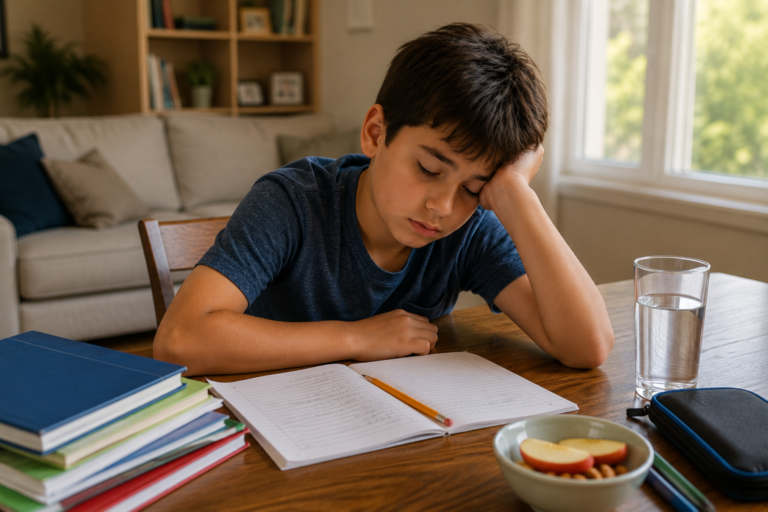
A tired child is not always just sleepy.
Sometimes they seem cranky, distracted, or unusually emotional. Sometimes they struggle to focus in class, forget simple directions, or get upset over small things. Many parents and caregivers see these changes but may not realize how deeply sleep shapes a child’s health and development.
Sleep is not just downtime. It is an active process that helps children’s brains and bodies grow, recover, and reset. Across many strong studies, healthy sleep is linked to better learning, steadier moods, healthier growth, and fewer behavior problems. On the other hand, too little or poor-quality sleep is linked to real challenges at home and in school, and over time.
The encouraging news is that sleep is something families, schools, and communities can support. It does not require perfect routines every night. It requires steady habits, realistic support, and an understanding that sleep is one of the foundations of child well-being.
Sleep is one of the building blocks of healthy development
Children need sleep for the same reason they need food, movement, safety, and connection. It supports physical health, brain development, learning, and emotional well-being.
During sleep, the brain helps organize memories, strengthen learning, and support emotional balance. In early life, sleep also plays an important role in brain development and healthy growth (Jiang, 2020). Reviews and clinical evidence consistently show that children who get enough good-quality sleep tend to do better across many areas of life, including school performance, mood, behavior, and overall health (Beebe, 2011; Liu et al., 2024).
Sleep needs change as children grow, but the importance of sleep stays the same. According to the American Academy of Sleep Medicine, infants ages 4 to 12 months need 12 to 16 hours of sleep in 24 hours, including naps. Children ages 1 to 2 need 11 to 14 hours. Ages 3 to 5 need 10 to 13 hours. Ages 6 to 12 need 9 to 12 hours. Teens ages 13 to 18 need 8 to 10 hours (Paruthi et al., 2016). The CDC aligns with these general targets in its public guidance.
When children regularly get less sleep than they need, the effects often show up in everyday ways: less patience, lower energy, harder school days, more conflict, and a harder time coping with normal stress.
1. Sleep supports healthy growth and weight
One of the clearest findings in pediatric sleep research is the link between sleep and physical health.
A major systematic review of children ages 0 to 4 found that shorter sleep duration was consistently associated with higher body fat, impaired growth, greater screen time, and a greater risk of injury (Chaput et al., 2017). Because this is based on a systematic review, it is fair to say that research shows that shorter sleep is linked to poorer health outcomes in early childhood.
A broader meta-review also found strong, consistent links between children’s sleep duration and adiposity (body fatness; Matricciani et al., 2019). This does not mean sleep is the only factor that affects weight or growth. Physical activity, food access, stress, neighborhood conditions, and health status matter too. But the evidence points to sleep as an important part of the picture.
Poor sleep may affect health in several ways. A child who does not sleep enough may feel more tired during the day, move less, spend more time on screens, and struggle more with routines that support health. Over time, those patterns can make maintaining overall well-being harder.
Healthy growth is about more than height and weight. It is about giving children the energy and physical foundation they need to thrive.
2. Sleep helps children focus, learn, and do better in school
Parents and teachers often notice the effects of poor sleep in the classroom first.
A child who is not getting enough sleep may have trouble paying attention, remembering instructions, finishing assignments, or staying organized. They may look distracted or mentally foggy. Research supports these observations.
A large meta-analysis found that sleep duration was positively associated with cognitive performance in school-age children, particularly school performance and executive functioning (Astill et al., 2012). Executive functioning includes skills like focusing attention, planning, managing impulses, and switching between tasks.
Beebe (2011) also found that inadequate sleep quality or quantity can lead to sleepiness, inattention, and likely other cognitive and behavioral difficulties in children and adolescents. Clinical evidence supports the idea that children learn better when they are well rested.
This makes sense in daily life. Learning takes mental energy. So does listening, problem-solving, remembering, and staying calm when work feels hard. Sleep helps children show up with the mental tools they need for all of that.
When sleep is short or broken, school can become harder than it needs to be.
3. Sleep supports memory and brain development
Sleep does not just affect how a child feels the next day. It may also shape development over time.
Research suggests that sleep plays a critical role in learning, memory, emotional regulation, and the development of brain structure and function (Jiang, 2020). That is especially important in childhood and adolescence, when the brain is still developing rapidly.
One major longitudinal study followed U.S. early adolescents and compared children who slept fewer than 9 hours with matched peers who slept more than 9 hours. The researchers found that insufficient sleep was associated with poorer mental health and cognition, as well as differences in brain structure and function over time (Yang et al., 2022). Because this was an observational study, it cannot establish causation as a randomized trial can. Still, the study was large and carefully designed, and it provides meaningful evidence that insufficient sleep during early adolescence may have lasting effects.
In simple terms, sleep helps the brain do important overnight work. When children miss out on that work often enough, the effects may build over time.
4. Sleep helps children manage emotions
Not every tired child looks sleepy. Some look irritable, sad, impulsive, or easily overwhelmed.
Research suggests that shorter or poorer sleep is linked to worse emotional outcomes in children (Liu et al., 2024; Matricciani et al., 2019). In younger children, this may manifest as difficulty calming down, stronger reactions, or increased frustration. In older children and teens, it may show up as irritability, low mood, or emotional ups and downs.
The meta-analysis by Astill et al. (2012) found that shorter sleep was associated with more internalizing and externalizing problems. Internalizing problems include symptoms like sadness or anxiety. Externalizing problems include behaviors such as aggression, impulsivity, and rule-breaking.
That does not mean sleep is the only reason a child struggles emotionally. Many things, including stress, relationships, life events, and mental health, shape children’s feelings. But sleep is one of the most practical and changeable parts of the picture.
When children are rested, they often have a better chance of handling disappointment, stress, and strong emotions steadily.
5. Sleep affects behavior and daily functioning
Sleep problems do not stay in the bedroom. They often shape how children act and function throughout the day.
Research suggests that children with insufficient sleep may have more trouble with attention, self-control, social-emotional functioning, and behavior (Beebe, 2011; Taveras et al., 2017). In one prospective study, insufficient sleep was associated with poorer neurobehavioral functioning among school-age children (Taveras et al., 2017).
In everyday terms, a child who does not sleep well may be quicker to argue, less patient with siblings, more likely to act before thinking, or more easily frustrated by routine tasks. These effects may be modest, but they matter, especially when poor sleep becomes a regular pattern.
Teens may also experience more daytime sleepiness, fatigue, lower motivation, and depressed mood when sleep is inadequate (Liu et al., 2024). These patterns can make normal daily demands feel heavier and harder to manage.
6. Sleep matters for safety
Sleep is also a safety issue.
In early childhood, shorter sleep has been linked to a greater risk of injuries (Chaput et al., 2017). Tired children may be less attentive and less physically coordinated. In older children and teens, inadequate sleep can lead to slower reaction time, lower alertness, and more mistakes during school, sports, and daily life (Beebe, 2011; Liu et al., 2024).
This is one reason sleep deserves the same attention families give to car seats, helmets, and healthy meals. It is part of keeping children safe.
7. Healthy routines can protect sleep and development
One of the most hopeful parts of this research is that sleep can improve when children have the right support.
Reviews and clinical guidance suggest that bedtime routines, consistent schedules, and healthy sleep environments can help children sleep better and may help prevent later problems (Liu et al., 2024; Sheehan, 2023). Research also suggests that bedtime routines are associated with better sleep outcomes in young children, including earlier bedtimes, less time needed to fall asleep, fewer night wakings, and longer sleep overall (Mindell et al., 2015).
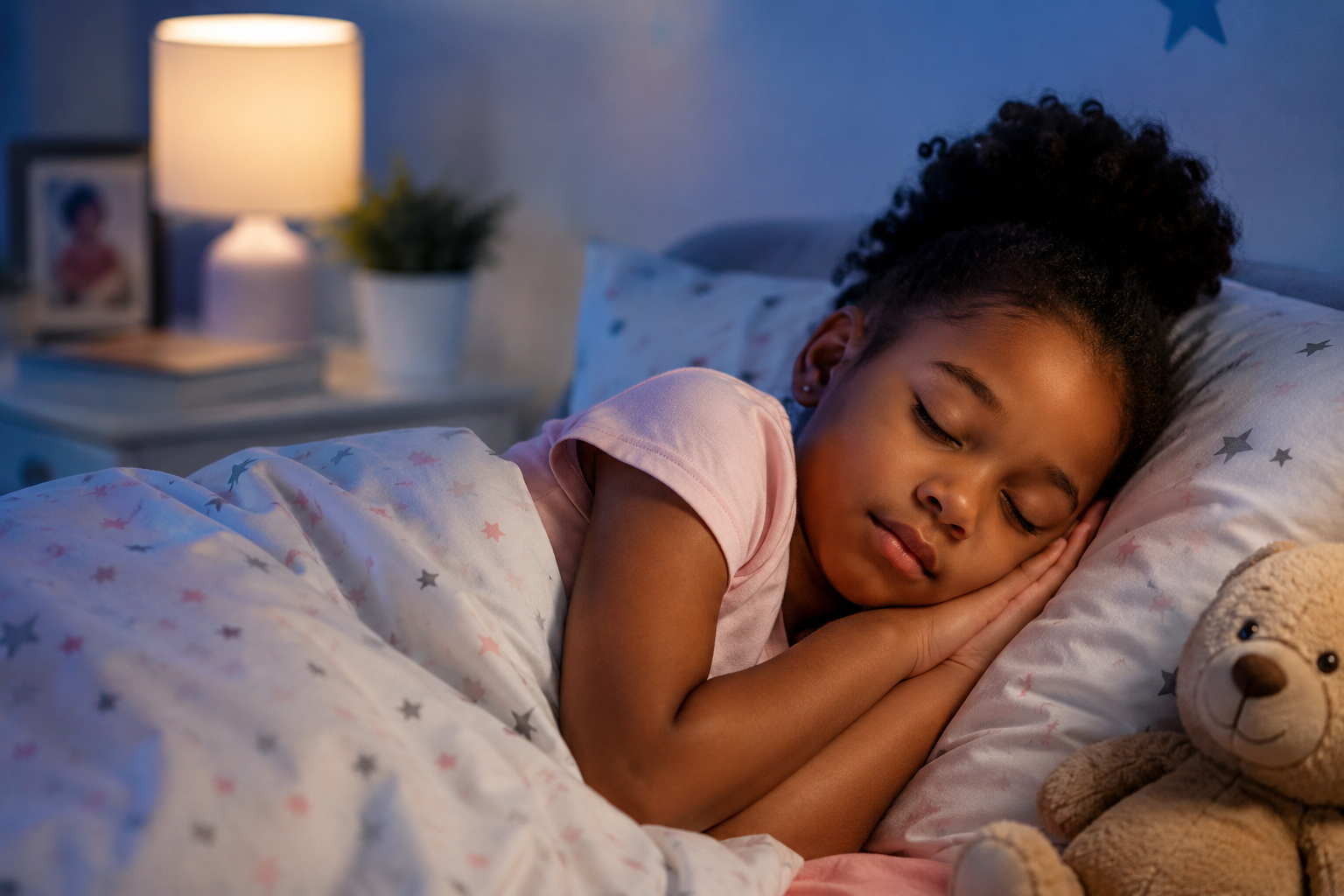
A bedtime routine does not need to be expensive or complicated. It can be simple and repeatable:
- wash up or take a bath
- put on pajamas
- brush teeth
- read a short story
- dim the lights
- go to bed at about the same time each night
What matters most is that the routine feels calm and predictable.
Other healthy sleep habits include:
- keeping bedtimes and wake times as regular as possible
- reducing screen use close to bedtime
- making the sleep space quiet, dark, and comfortable
- avoiding caffeine in older children and teens
- paying attention to frequent snoring or ongoing sleep trouble
These steps will not solve every problem, especially when families are dealing with stress, shift work, crowded housing, or limited resources. But they can help.
Schools and systems matter too.
Sleep is not shaped only by what happens at home.
School schedules, neighborhood noise, housing conditions, family work hours, stress, transportation, and access to healthcare all affect how much sleep children get. This is why sleep should also be seen as a health equity issue.
Families facing financial strain or unstable schedules may have fewer options for building ideal sleep routines. That is not a failure of parenting. It is a reminder that real-life conditions shape sleep.
For teens, school start times are a clear example. The American Academy of Pediatrics has recommended later school start times for adolescents because teen biology naturally shifts toward later sleep and wake times during puberty (American Academy of Pediatrics, 2014). Research and policy guidance suggest that later start times can improve sleep duration, reduce daytime sleepiness, and support better well-being.
Children sleep best when families are supported by systems that enable healthy sleep.
What parents and caregivers should watch for
Some sleep struggles are common and short-term. Others deserve medical attention.
It is a good idea to talk with a healthcare professional if a child regularly:
- snores loudly
- seems to stop breathing during sleep
- has trouble falling asleep most nights
- wakes often and cannot settle back down
- is very sleepy during the day
- has behavior or learning problems that may be made worse by poor sleep
- Seems to get enough hours of sleep, but still never feels rested
These signs do not necessarily indicate that something serious is wrong. But they do mean it is worth checking in.
Practical takeaways
Sleep is one of the clearest building blocks of healthy child development.
Research shows that sleep supports:
- healthy growth and weight
- attention, memory, and learning
- emotional balance
- better behavior and self-control
- daily energy and safety
When sleep is too short or of poor quality regularly, the effects can spread across many aspects of life. The goal is not perfect sleep every night. The goal is a healthy pattern over time.
Small changes can matter. So, support can come from schools, healthcare professionals, and community systems.
FAQ
Why does sleep matter so much for children?
Sleep helps children grow, learn, manage emotions, and function well during the day. Research links good sleep to better physical health, stronger cognitive skills, and fewer emotional and behavioral problems.
How much sleep do children need?
It depends on age. School-age children ages 6 to 12 generally need 9 to 12 hours in a 24-hour period. Teens ages 13 to 18 generally need 8 to 10 hours (Paruthi et al., 2016).
Can poor sleep affect behavior?
Yes. Research suggests that shorter or poorer-quality sleep is associated with increased emotional and behavioral problems in children, including irritability, impulsivity, and difficulty with self-control.
Do bedtime routines really help?
Research suggests they do, especially for younger children. Regular bedtime routines are linked to longer sleep, fewer night wakings, and easier bedtimes.
Save this article for the next time bedtime feels hard.
Share it with a parent, caregiver, teacher, or school leader who wants to help children feel better, learn better, and grow well. See also CareThrive content on sleep health, stress resilience, and healthy family routines.
This article is for informational purposes only and does not constitute medical advice. Please consult a qualified healthcare provider for personalized guidance.
References
American Academy of Pediatrics. (2014). School start times for adolescents. Pediatrics, 134(3), 642–649. https://doi.org/10.1542/peds.2014-1697
Astill, R. G., van der Heijden, K. B., van IJzendoorn, M. H., & van Someren, E. J. W. (2012). Sleep, cognition, and behavioral problems in school-age children: A century of research meta-analyzed. Psychological Bulletin, 138(6), 1109–1138. https://doi.org/10.1037/a0028204
Beebe, D. W. (2011). Cognitive, behavioral, and functional consequences of inadequate sleep in children and adolescents. Pediatric Clinics of North America, 58(3), 649–665. https://doi.org/10.1016/j.pcl.2011.03.002
Centers for Disease Control and Prevention. (2024, May 15). About sleep. https://www.cdc.gov/sleep/about/index.html
Chaput, J.-P., Gray, C. E., Poitras, V. J., Carson, V., Gruber, R., Birken, C. S., MacLean, J. E., Aubert, S., Sampson, M., & Tremblay, M. S. (2017). Systematic review of the relationships between sleep duration and health indicators in the early years (0–4 years). BMC Public Health, 17(Suppl. 5), 855. https://doi.org/10.1186/s12889-017-4850-2
Jiang, F. (2020). Sleep and early brain development. Annals of Nutrition and Metabolism, 75(Suppl. 1), 44–54. https://doi.org/10.1159/000508055
Liu, J., Ji, X., Pitt, S., Wang, G., Rovit, E., Lipman, T., & Jiang, F. (2024). Childhood sleep: Physical, cognitive, and behavioral consequences and implications. World Journal of Pediatrics, 20(2), 122–132. https://doi.org/10.1007/s12519-022-00647-w
Matricciani, L., Paquet, C., Galland, B., Short, M., & Olds, T. (2019). Children’s sleep and health: A meta-review. Sleep Medicine Reviews, 46, 136–150. https://doi.org/10.1016/j.smrv.2019.04.011
Mindell, J. A., Li, A. M., Sadeh, A., Kwon, R., & Goh, D. Y. T. (2015). Bedtime routines for young children: A dose-dependent association with sleep outcomes. Sleep, 38(5), 717–722. https://doi.org/10.5665/sleep.4662
Paruthi, S., Brooks, L. J., D’Ambrosio, C., Hall, W. A., Kotagal, S., Lloyd, R. M., Malow, B. A., Maski, K., Nichols, C., Quan, S. F., Rosen, C. L., & Troester, M. M. (2016). Recommended amount of sleep for pediatric populations: A consensus statement of the American Academy of Sleep Medicine. Journal of Clinical Sleep Medicine, 12(6), 785–786. https://doi.org/10.5664/jcsm.5866
Sheehan, A. (2023). The importance of sleep for normal growth and development. Advances in Family Practice Nursing, 5(1), 193–205. https://doi.org/10.1016/j.yfpn.2022.11.012
Taveras, E. M., Rifas-Shiman, S. L., Bub, K. L., Gillman, M. W., & Oken, E. (2017). Prospective study of insufficient sleep and neurobehavioral functioning among school-age children. Academic Pediatrics, 17(6), 625–632. https://doi.org/10.1016/j.acap.2017.02.001
Yang, F. N., Xie, W., & Wang, Z. (2022). Effects of sleep duration on neurocognitive development in U.S. early adolescents: A propensity score-matched, longitudinal, observational study. The Lancet Child & Adolescent Health, 6(10), 705–712. https://doi.org/10.1016/S2352-4642(22)00188-2