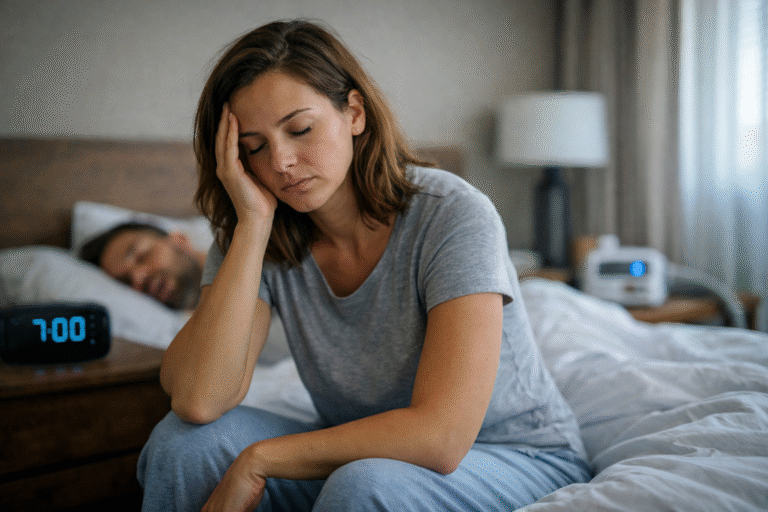
The Truth About Melatonin
What It Really Does to Your Body — and How to Use It Wisely

The supplement industry has taken a subtle, precise hormonal signal and turned it into a high-dose, over-marketed product. Walk into any pharmacy, and you will find melatonin in 5 mg, 10 mg, and even 20 mg doses, displayed next to prescription sleep medications and marketed with similar promises.
Most people buy the largest dose available and take it when they cannot sleep, expecting it to knock them out.
Melatonin does not work that way. It was never designed to.
Melatonin is not a sleeping pill. It is a timing hormone, a signal the brain releases each evening to tell the body that night has arrived (Brzezinski, 1997). Understanding that a single distinction changes everything about whether melatonin can help, what makes sense, and why so many people use it and feel disappointed.
Melatonin opens the door to sleep. It does not push you through it.
What Melatonin Actually Is
Deep inside the brain sits a small structure called the pineal gland, roughly the size of a grain of rice. As evening light fades, this gland begins releasing melatonin.
Its message is simple: it is dark outside. Shift into nighttime mode.
Melatonin does not sedate you. It does not silence racing thoughts or force the eyes shut. Instead, it coordinates the body’s internal systems, aligning the heart, blood pressure, immune activity, digestion, and hormonal rhythms into a nighttime pattern (Arendt, 2005).
Think of melatonin as the conductor of an orchestra. It does not play every instrument. It ensures everything moves in the same direction.
When melatonin rises naturally:
• Body temperature dips slightly
• Blood pressure eases
• Repair and immune processes increase
• Sleepiness builds gradually
It is coordination, not sedation.
How the Body Clock Works
Inside the brain is a master clock that runs on a roughly 24-hour cycle. It controls alertness, hormone release, body temperature, and sleep timing. Its primary cue is light (Sack et al., 2007).
Morning light signals the clock that the day has begun. Energy hormones rise. Body temperature increases.
As darkness falls, the pineal gland signals the release of melatonin.
For most people, the issue is not a melatonin deficiency. It is a light imbalance.
Modern life creates dim days and bright nights, the opposite of what the body expects (Gooley et al., 2011).
Bright mornings and dark evenings are the foundation of healthy sleep timing.
Where Melatonin Helps — and Where It Does Not
Melatonin is most useful for timing problems.
It has limited evidence for stress-driven insomnia, anxiety-related sleep problems, or chronic behavioral insomnia (Buscemi et al., 2005).
Where evidence is strong:
Jet lag
Taking melatonin at the destination’s evening can help the body adjust more quickly, especially when traveling east (Herxheimer & Petrie, 2002).
Delayed sleep phase
Individuals who naturally fall asleep very late may benefit from small evening doses combined with morning light exposure (Lewy et al., 1998).
Shift work
Melatonin can help signal nighttime when sleep must occur during daylight hours (Sack et al., 2007).
Age-related sleep changes
Older adults produce less melatonin. Low doses may strengthen the nighttime signal (Buscemi et al., 2005).
Where melatonin does not help:
• Stress-induced insomnia
• Anxiety-driven racing thoughts
• Chronic insomnia lasting months or years
Melatonin shifts timing. It does not calm an activated nervous system.
On average, melatonin reduces sleep onset by about 10–20 minutes. It does not reliably increase total sleep time or cure long-term insomnia (Buscemi et al., 2005).
Dose: Why Less Is More
The body naturally produces melatonin in tiny fractions of a milligram.
Most over-the-counter products are 5 to 10 mg, far above physiological levels.
High doses do not work better. They often cause:
• Morning grogginess
• Vivid dreams
• Headaches
• Hormonal rhythm disruption
Taking too much melatonin keeps levels elevated into the morning, interfering with the body’s wake signal.
A practical guideline:
• Start with 0.3 to 1 mg
• Increase to 2–3 mg only if needed
• Older adults should stay at the lower end
Skip the 5 mg and 10 mg products unless specifically advised (Zhdanova et al., 1995).
Timing Matters More Than Dose
When melatonin is taken, it matters more than how much is taken.
Melatonin physically shifts the body clock (Lewy et al., 1998). Taken at the wrong time, it can shift sleep later instead of earlier.
The body naturally begins producing melatonin two to three hours before bedtime.
Melatonin works best when taken 30 to 90 minutes before the intended bedtime, not at midnight in frustration.
Planned use is effective. Panic use is not.
Light Works Better Than Any Supplement
The most powerful regulator of melatonin is light (Gooley et al., 2011).
Morning light strengthens the body clock.
Spend 10–30 minutes outdoors within an hour of waking.
In the evening:
• Dim lights
• Reduce screens
• Avoid bright overhead lighting
Blue light from screens directly suppresses melatonin for hours after exposure.
Correcting light exposure often resolves mild sleep timing issues without the need for supplements.
Safety: The Honest Picture
For healthy adults using low doses for short-term use, melatonin is generally considered safe.
It does not appear to cause dependence.
However, it is a hormone, and hormones influence multiple systems.
Common side effects at higher doses:
• Morning grogginess
• Vivid dreams
• Headaches
• Dizziness
• Nausea
Melatonin can mildly lower blood pressure and influence blood sugar regulation (Buscemi et al., 2005).
Consult a healthcare provider before use if you:
• Take blood pressure medication
• Take antidepressants
• Use blood thinners
• Have diabetes
• Are you pregnant or breastfeeding
• Have autoimmune conditions
• Plan to give melatonin to a child
Quality matters.
Independent testing has found that actual melatonin content in supplements can vary widely from the label (Erland & Saxena, 2017).
Look for third-party testing certification, such as USP or NSF.
How to Use Melatonin Wisely
Step 1: Identify the real problem
Is it timing? Or is it stress and anxiety?
Step 2: Fix light exposure first
Morning sunlight. Dim evenings. Consistent wake time.
Step 3: Start low
0.3–1 mg.
Step 4: Take it at the right time
30–90 minutes before bedtime.
Step 5: Reassess regularly
If sleep improves, try discontinuing after a few weeks.
Step 6: Seek proper help for chronic insomnia
Cognitive Behavioral Therapy for Insomnia (CBT-I) remains the most effective long-term treatment (Morin et al., 2006).
The Bottom Line
Melatonin is a real hormone with legitimate use.
Used properly, low dose, correct timing, clear purpose, it can meaningfully help with sleep timing challenges.
Used incorrectly, at a high dose, with the wrong timing, or as a nightly sedative habit, it often disappoints.
The body already knows how to sleep.
What it needs most:
Bright mornings.
Dark evenings.
Consistent wake times.
Manageable stress.
Build those first.
Disclaimer
This article is for educational purposes only and does not constitute medical advice. It does not create a physician-patient relationship. Always consult a qualified healthcare provider before starting, stopping, or changing any supplement or medication.
References
Arendt, J. (2005). Melatonin: Characteristics, concerns, and prospects. Journal of Biological Rhythms, 20(4), 291–303.
Brzezinski, A. (1997). Melatonin in humans. New England Journal of Medicine, 336(3), 186–195.
Buscemi, N., et al. (2005). The efficacy and safety of exogenous melatonin for primary sleep disorders. Journal of General Internal Medicine, 20(12), 1151–1158.
Erland, L. A., & Saxena, P. K. (2017). Variability of melatonin content in supplements. Journal of Clinical Sleep Medicine, 13(2), 275–281.
Gooley, J. J., et al. (2011). Exposure to room light before bedtime suppresses melatonin onset. Journal of Clinical Endocrinology & Metabolism, 96(3), E463–E472.
Herxheimer, A., & Petrie, K. J. (2002). Melatonin for jet lag. Cochrane Database of Systematic Reviews.
Lewy, A. J., et al. (1998). The human phase response curve to melatonin. Chronobiology International, 15(1), 71–83.
Morin, C. M., et al. (2006). Psychological and behavioral treatment of insomnia. Sleep, 29(11), 1398–1414.
Sack, R. L., et al. (2007). Circadian rhythm sleep disorders. Sleep, 30(11), 1460–1483.
Zhdanova, I. V., et al. (1995). Sleep-inducing effects of low doses of melatonin. Clinical Pharmacology & Therapeutics, 57(5), 552–558.