7 Surprising Hantavirus Facts That Could Save Your Life

This article is for informational purposes only and does not constitute medical advice. Please consult a qualified healthcare provider for personalized guidance.
When most people hear “hantavirus,” they think of something rare, remote, and not very relevant to daily life. In one sense, that is true. Hantavirus disease is uncommon in the United States. CDC reports 890 laboratory-confirmed U.S. cases from 1993 through the end of 2023. But here is the surprising part: the situations that raise risk are often very ordinary. Cleaning a shed. Opening a dusty cabin. Sweeping up mouse droppings in a garage and staying in a rodent-infested storage space or campsite.
This topic also matters because hantavirus has been back in the headlines. On May 8, 2026, the CDC issued a Health Alert about a multi-country Andes virus cluster linked to cruise travel. CDC also said the overall risk to the American public and travelers remained extremely low. That balance matters. This is not a reason to panic. It is a reason to know the basics, understand the warning signs, and learn the cleanup steps that can lower exposure risk.
Below are seven surprising facts worth knowing.
1) Hantavirus is rare, but it can become serious very fast
Hantaviruses are a family of viruses spread mainly by rodents. CDC says they can cause serious illness and death in people. These viruses are linked to two major severe syndromes: hantavirus pulmonary syndrome, often called HPS, and hemorrhagic fever with renal syndrome, or HFRS. In the Americas, hantaviruses are more often associated with HPS, which mainly affects the lungs. In Europe and Asia, they are more often linked with HFRS, which can involve kidney injury, bleeding problems, and low platelets.
What makes hantavirus concerning is not how common it is, but how quickly some people can worsen once breathing symptoms start. CDC says HPS can begin with fever, fatigue, and muscle aches, then progress to cough, shortness of breath, and fluid in the lungs. CDC also says about 38% of people who develop respiratory symptoms may die from the disease. A major 2023 review in The Lancet Infectious Diseases likewise describes hantavirus as a severe zoonotic infection in which early recognition and supportive care are critical.
2) It usually spreads from rodents, not from other people
Most hantavirus infections start with exposure to rodents, not to a sick person. CDC says people are usually infected through contact with infected rodents or their urine, droppings, saliva, or nesting materials. In practice, that often means contaminated dust in closed or poorly ventilated areas. People mostly contract hantavirus by inhaling virus particles when contaminated material is disturbed.
That is why exposure risk tends to rise in ordinary spaces where rodents have been active: sheds, garages, attics, barns, crawl spaces, storage units, cabins, and some campsites. CDC’s prevention and clinical guidance consistently focus on reducing rodent exposure in homes, workplaces, and outdoor settings.
This point also matters for health equity. Not everyone has the same ability to avoid rodent exposure. Older housing, farm work, temporary lodging, and disaster cleanup can all increase risk, regardless of the person affected. Good public health advice should acknowledge those barriers rather than assume everyone has the same housing, tools, or support.
3) The main person-to-person exception is the Andes virus
This is one of the most important facts in any hantavirus article. CDC states that the Andes virus is the only type of hantavirus known to spread person-to-person, and that this spread is usually limited to people who have close contact with an ill person. CDC’s Andes virus page says the virus is found in South America and can spread by rodents and, more rarely, through contact with a sick person who has the virus.
That claim is not based solely on public health guidance. It is also supported by primary research. In a 2020 study in the New England Journal of Medicine, Martínez and colleagues analyzed an Andes virus outbreak in Argentina and documented person-to-person transmission, including cluster patterns consistent with “super-spreaders.”
This is why recent news coverage has focused so heavily on the Andes virus rather than treating all hantaviruses as the same. The current CDC outbreak pages are specifically about Andes virus, not hantaviruses broadly. That distinction matters because most hantaviruses are not known to spread between people.
4) Early symptoms can look a lot like the flu
Hantavirus does not always announce itself clearly at first. CDC says early symptoms can include fever, fatigue, muscle aches, headache, chills, and stomach symptoms such as nausea, vomiting, diarrhea, or abdominal pain. CDC also notes that early illness can look flu-like, which is one reason diagnosis may be difficult in the first 72 hours.
That overlap makes self-diagnosis hard. A fever after cleaning a shed may still be a common viral illness. But symptoms plus exposure history are what should raise concern. If someone develops flu-like symptoms after cleaning mouse droppings, entering an abandoned building, or staying in a rodent-infested space, that context should be shared with a clinician. CDC advises people who suspect hantavirus disease to seek medical attention immediately and mention possible rodent exposure.
The practical lesson is simple: symptoms alone do not tell the full story. Exposure history helps clinicians determine when a rare disease warrants closer scrutiny.
5) Shortness of breath is the red-flag symptom
For HPS, the most dangerous turn often happens after the early phase. CDC says that four to ten days after initial symptoms begin, patients can develop cough and shortness of breath as the lungs fill with fluid. This is when the disease can become life-threatening very quickly.
Why does that happen? Reviews suggest the damage is driven less by direct tissue destruction and more by vascular leakage and immune dysregulation. The 2023 Lancet Infectious Diseases review frames severe disease as characterized by endothelial dysfunction, capillary leak, and rapid cardiopulmonary decline. A 2025 review in Virulence focuses on pathogenicity and Virulence of rodent-borne orthohantaviruses and supports the role of vascular dysregulation in severe disease.
That is why shortness of breath after likely rodent exposure should never be brushed off. It is not a wait-and-see symptom. It is a reason to seek urgent medical care.
6) There is still no widely approved specific treatment
Many people assume that a dangerous virus must have a standard antiviral treatment ready to go. With hantavirus, that is still not the case. CDC says there is no specific treatment for hantavirus infection and that care is supportive. Patients with severe HPS may need breathing support and intensive care. Patients with HFRS may need management for kidney injury and, in some cases, dialysis.
Recent reviews agree. The 2023 Lancet Infectious Diseases review describes supportive management as the foundation of treatment. The 2025 Viruses review on diagnostics and surveillance states that there is currently no approved therapy or vaccine for orthohantaviruses. A 2023 Frontiers in Microbiology review summarizes ongoing research into antivirals, immune-based therapies, and vaccine candidates, but these approaches are still not the standard of care.
This does not mean medicine has nothing to offer. It means timing matters. Early supportive care can save lives, even when no specific antiviral is available. That is why clinicians are encouraged to act early when hantavirus is suspected.
7) The safest way to clean rodent droppings is not what many people instinctively do
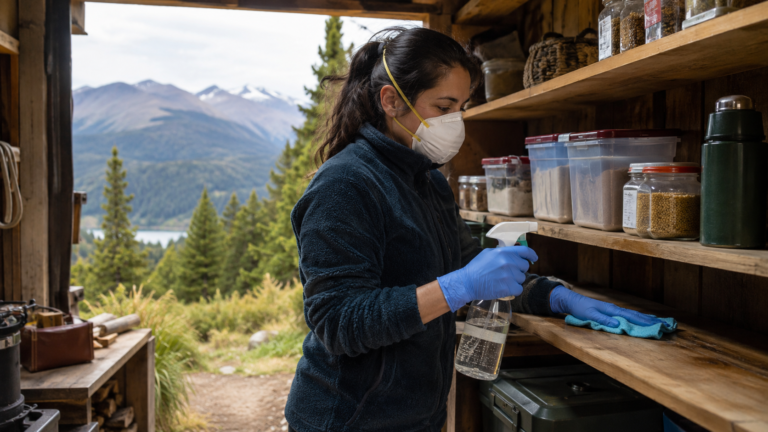
Many people see droppings and reach for a broom or a vacuum. CDC says not to sweep or vacuum rodent urine, droppings, or nesting materials, as this can stir up virus particles into the air.
Instead, CDC recommends a wet-cleaning approach. Air out the area first. Wear gloves. Spray droppings, nests, or contaminated surfaces with a disinfectant or bleach solution until thoroughly wet. Let it soak, then wipe up the material with paper towels or other disposable supplies. Bag the waste and wash your hands carefully after removing gloves.
This advice sounds simple, but it is one of the most important prevention steps we have. Because there is no widely approved specific treatment, prevention still depends heavily on rodent control, sealing entry points, safe cleanup, trapping, and reducing food or shelter that attract rodents.
What the recent headlines actually mean
The 2026 CDC Health Alert reported a multi-country Andes virus cluster linked to cruise travel. CDC said the outbreak virus was the Andes virus and that, as of May 8, 2026, multiple confirmed and suspected cases had been identified. At the same time, CDC said no U.S. cases had been confirmed from the outbreak and that the overall risk to the American public remained extremely low.
That can sound contradictory, but it is not. A rare disease can be serious enough to warrant public health action without posing a broad, everyday threat to most people. The better response is informed caution, not fear.
Practical takeaways
- Hantavirus is rare, but it can become severe quickly.
- Most infections come from rodent exposure, not other people.
- The Andes virus is the main documented example of person-to-person transmission.
- Early symptoms often look like the flu.
- Shortness of breath after likely exposure is a medical emergency.
- Never sweep or vacuum dry rodent droppings. Wet disinfect first.
- Early supportive care matters because there is no widely approved specific treatment.
FAQ
Is hantavirus contagious?
Usually no. Most hantaviruses are not transmitted person-to-person. The Andes virus is the main documented exception.
What are the first symptoms of hantavirus?
Early symptoms often include fever, fatigue, muscle aches, headache, chills, and sometimes nausea, vomiting, diarrhea, or abdominal pain.
Can hantavirus come from mouse droppings?
Yes. CDC says infection often happens through exposure to infected rodent urine, droppings, saliva, or nesting materials, especially when contaminated particles are inhaled.
Should I be worried about the recent outbreak news?
Stay informed, not alarmed. CDC says the current Andes virus outbreak response deserves attention, but the overall risk to the general U.S. public remains extremely low.
Save this article so you’ll have the cleanup steps and warning signs ready if you ever need them. Share it with someone who camps, cleans out storage spaces, works in barns or sheds, or deals with rodents at home. Clear, practical information can help people clean more safely, spot red flags sooner, and know when to get medical care.
This article is for informational purposes only and does not constitute medical advice. Please consult a qualified healthcare provider for personalized guidance.
References
Centers for Disease Control and Prevention. (2024, May 13). About hantavirus. CDC.
https://www.cdc.gov/hantavirus/about/index.html
Centers for Disease Control and Prevention. (2026). About the Andes virus. CDC.
https://www.cdc.gov/hantavirus/about/andesvirus.html
Centers for Disease Control and Prevention. (2026). Clinical overview of hantavirus. CDC.
https://www.cdc.gov/hantavirus/hcp/clinical-overview/index.html
Centers for Disease Control and Prevention. (2026). Clinician brief: Hantavirus pulmonary syndrome (HPS). CDC.
https://www.cdc.gov/hantavirus/hcp/clinical-overview/hps.html
Centers for Disease Control and Prevention. (2026, April 23). Reported cases of hantavirus disease. CDC.
https://www.cdc.gov/hantavirus/data-research/cases/index.html
Centers for Disease Control and Prevention. (2026, May 8). A 2026 multi-country hantavirus cluster linked to a cruise ship. Health Alert Network. CDC.
https://www.cdc.gov/han/php/notices/han00528.html
Centers for Disease Control and Prevention. (2026). Andes virus outbreak on a cruise ship: Current situation. CDC.
https://www.cdc.gov/hantavirus/situation-summary/index.html
Afzal, S., Ali, L., Batool, A., Afzal, M., Kanwal, N., Hassan, M., Safdar, M., Ahmad, A., & Yang, J. (2023). Hantavirus: An overview and advancements in therapeutic approaches for infection. Frontiers in Microbiology, 14, 1233433.
https://doi.org/10.3389/fmicb.2023.1233433
Martínez, V. P., Di Paola, N., Alonso, D. O., Pérez-Sautu, U., Bellomo, C. M., Iglesias, A. A., Coelho, R. M., López, B., Periolo, N., Larson, P. A., Nagle, E. R., Chitty, J. A., Pratt, C. B., Díaz, J., Cisterna, D., Campos, J., Sharma, H., Dighero-Kemp, B., Biondo, E., … Palacios, G. (2020). “Super-spreaders” and person-to-person transmission of Andes virus in Argentina. The New England Journal of Medicine, 383(23), 2230–2241.
https://doi.org/10.1056/NEJMoa2009040
Romeo, M. A., Tofani, S., Lapa, D., Mija, C., Maggi, F., Scicluna, M. T., & Nardini, R. (2025). Orthohantaviruses: An overview of the current status of diagnostics and surveillance. Viruses, 17(5), 622.
https://doi.org/10.3390/v17050622
Taylor, S. L., Schmaljohn, C. S., Williams, E. P., & Jonsson, C. B. (2025). Pathogenicity and Virulence of Rodent-Borne Orthohantaviruses. Virulence, 16(1), 2553784.
https://doi.org/10.1080/21505594.2025.2553784
Vial, P. A., Ferrés, M., Vial, C., Klingström, J., Ahlm, C., López, R., Le Corre, N., & Mertz, G. J. (2023). Hantavirus in humans: A review of clinical aspects and management. The Lancet Infectious Diseases, 23(9), e371–e382.
https://doi.org/10.1016/S1473-3099(23)00128-7